How to Choose the Right Wheel and Hub in 2026?
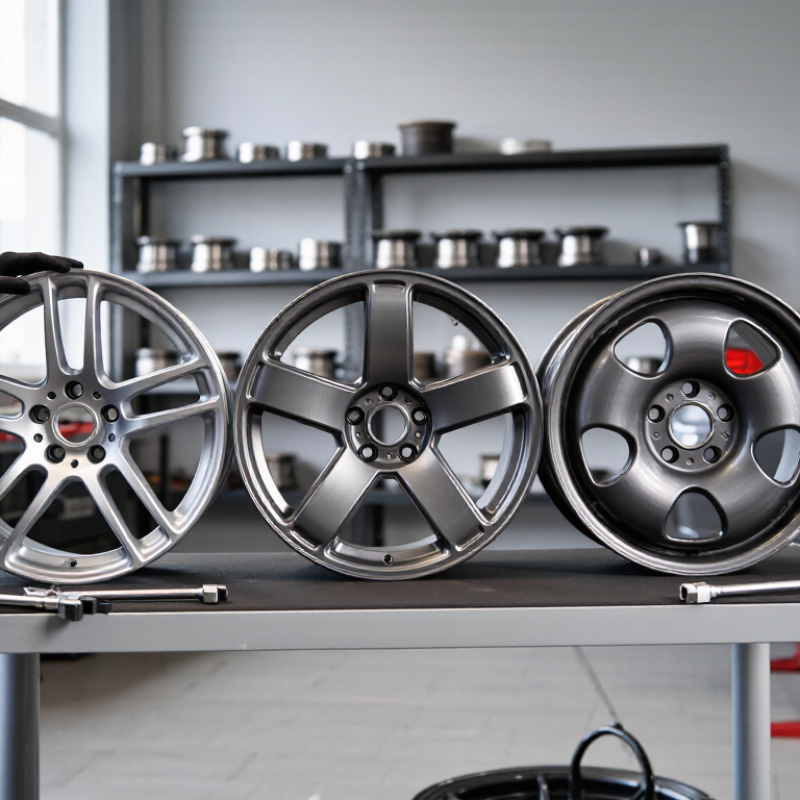
Choosing the right Wheel And Hub in 2026 requires more than matching a stylish rim to a vehicle. Fitment, load capacity, braking clearance, and long-term reliability must work together.
David C. Smith, a respected automotive wheel industry editor, has offered a practical reminder: “A wheel is only successful when it performs safely in the real world.” That idea should guide every buying decision. A wheel may look perfect online, yet its bolt pattern, center bore, offset, or load rating could be wrong. Small differences matter. A few millimeters can affect steering feel, tire wear, and suspension clearance.
Measure carefully.
This guide will explain how to compare wheel materials, hub compatibility, bearing quality, and manufacturing standards. It will also examine forged aluminum, cast alloy, and steel options. Each choice has trade-offs. Forged wheels can reduce weight, but their price may challenge ordinary budgets. Steel wheels often survive harsh conditions, though they add weight and may corrode around damaged coatings.
The hub deserves equal attention. Inspect the hub face, studs, bearings, seals, and sensor compatibility. A clean mounting surface is essential. Use a calibrated torque wrench, not guesswork. That detail is easy to overlook.
My own practical concern is simple: many buyers trust appearance too quickly. I have done that before. A polished finish cannot compensate for incorrect offset or insufficient capacity. Therefore, the following sections focus on verified specifications, professional installation, and honest reconsideration before purchase. Your vehicle’s manual and a qualified technician should remain the final reference points.
Define Vehicle Loads with GVWR, GAWR, and SAE J2530 Wheel Ratings
How to Choose the Right Wheel and Hub in 2026?
Wheel selection starts with the vehicle’s real load limits, not appearance. GVWR is the maximum loaded vehicle weight set by the manufacturer. GAWR defines the maximum load for each axle. NHTSA’s tire and loading information requirements show why these figures matter at the door label. A wheel can fit the hub and still be unsafe under full payload.
For example, a vehicle may show a 6,000-pound GVWR, with a 3,000-pound front GAWR and a 3,500-pound rear GAWR. The axle ratings total 6,500 pounds, but the vehicle cannot legally exceed 6,000 pounds. Cargo placement also changes axle loading. A toolbox behind the rear axle adds stress quickly. Do not divide GVWR evenly between four wheels.
SAE J2530, Aftermarket Wheel Performance Requirements and Test Procedures, evaluates aftermarket wheels through requirements such as radial fatigue, cornering fatigue, and impact performance. Compare the wheel’s published load rating with the heaviest possible load at each corner. The hub’s bolt pattern, center bore, offset, and fastener seating must also match precisely. SAE J2530 is not a substitute for the vehicle’s GAWR. That shortcut is tempting, but wrong. In field checks, technicians sometimes confirm diameter first and load capacity later. I have found that approach incomplete. Temperature, tire pressure, passengers, and accessories can expose the mistake. Verify the door label, weigh the loaded axles, and retain the test documentation before ordering.
How to Choose the Right Wheel and Hub in 2026? - Define Vehicle Loads with GVWR, GAWR, and SAE J2530 Wheel Ratings
| Selection Dimension | What It Means | Reliable Data or Formula | Wheel and Hub Selection Guidance |
|---|---|---|---|
| GVWR | Gross Vehicle Weight Rating: the maximum permitted total weight of the vehicle, including occupants, cargo, fuel, fluids, and equipment. | Use the vehicle certification label or official vehicle documentation. GVWR is not the same as the vehicle's curb weight. | The selected wheel and tire package must support the intended loaded vehicle condition without exceeding the applicable axle, tire, or wheel limits. |
| GAWR – Front | Gross Axle Weight Rating for the front axle: the maximum allowable weight supported by the front axle assembly and its related components. | Read the front GAWR from the vehicle certification label. A simple two-wheel reference load is: Front GAWR ÷ 2. | The front wheel rating should be at least the required per-wheel load after considering the manufacturer's specifications, uneven loading, and any applicable safety margin. |
| GAWR – Rear | Gross Axle Weight Rating for the rear axle: the maximum allowable weight supported by the rear axle assembly and its related components. | Read the rear GAWR from the vehicle certification label. A simple two-wheel reference load is: Rear GAWR ÷ 2. | Rear cargo loading can create high wheel loads. Confirm the wheel, tire, hub, bearing, and axle ratings independently rather than relying only on GVWR. |
| Per-Wheel Load | The portion of an axle load carried by one wheel and tire position. | Reference per-wheel load = applicable GAWR ÷ number of wheels on that axle. Actual left/right loading may not be perfectly equal. | Choose a wheel load rating that is not lower than the applicable measured or calculated wheel position load. Do not use GVWR ÷ 4 as a substitute when axle ratings are available. |
| SAE J2530 | A Society of Automotive Engineers standard covering performance requirements and test procedures for aftermarket automotive wheels. | J2530 addresses wheel performance evaluation, including fatigue and impact-related testing. It does not create one universal wheel load rating for every vehicle class. | Use a wheel with a clearly declared load rating and documented compliance information where applicable. The wheel must also match the vehicle's fitment and load requirements. |
| Wheel Load Rating | The maximum load assigned to one wheel under the wheel maker's stated conditions. | Compare the wheel's marked or documented load rating with the required load at that wheel position. Convert units consistently: 1 kg ≈ 2.205 lb. | Select the lowest-rated component in the wheel, tire, hub, bearing, and axle system as the practical limiting capacity. |
| Hub Bore and Hub-Centric Fit | The center bore of the wheel must properly locate on the vehicle hub or use an accurately specified centering ring where permitted. | The wheel center bore must not be smaller than the hub pilot diameter. A larger bore requires a correctly sized, load-capable centering solution if approved for the application. | A correct bolt pattern alone does not guarantee proper fit. Prevent interference with the hub, brake components, studs, and wheel fasteners. |
| Bolt Pattern and Fasteners | Bolt count, pitch-circle diameter, thread specification, seat type, and fastener engagement must match the vehicle and wheel. | Verify bolt count, pitch-circle diameter, thread pitch, fastener seat profile, and minimum thread engagement using the vehicle and wheel specifications. | Never force incompatible fasteners or mix conical-seat and spherical-seat designs. Tighten to the vehicle's specified torque and recheck after installation. |
| Offset and Backspacing | Offset is the distance between the wheel mounting face and the wheel centerline. Backspacing is the distance from the mounting face to the inner wheel edge. | Incorrect offset can alter steering geometry, suspension clearance, scrub radius, and bearing loads. | Confirm inner and outer clearance at full steering lock and through full suspension travel. Avoid changes that cause tire rubbing or excessive bearing leverage. |
| Brake and Suspension Clearance | The wheel must clear brake calipers, rotors, drums, steering parts, struts, control arms, and other nearby components. | Clearance must be checked physically or against verified dimensional data; nominal wheel diameter alone is not sufficient. | Test-fit when possible and inspect clearance with the suspension loaded, steering at both locks, and the tire at its full operating envelope. |
Worked Load Examples
| Illustrative Vehicle Data | Calculation | Result | Interpretation |
|---|---|---|---|
| GVWR: 2,268 kg (5,000 lb) Front GAWR: 1,134 kg (2,500 lb) Rear GAWR: 1,361 kg (3,000 lb) |
Front: 1,134 ÷ 2 Rear: 1,361 ÷ 2 |
Front reference load: 567 kg (1,250 lb) per wheel Rear reference load: 680.5 kg (1,500 lb) per wheel |
A rear wheel rating below 680.5 kg (1,500 lb) would not meet this simple GAWR-based reference. Confirm the actual wheel documentation and vehicle requirements before installation. |
| GVWR: 3,175 kg (7,000 lb) Front GAWR: 1,361 kg (3,000 lb) Rear GAWR: 1,814 kg (4,000 lb) |
Front: 1,361 ÷ 2 Rear: 1,814 ÷ 2 |
Front reference load: 680.5 kg (1,500 lb) per wheel Rear reference load: 907 kg (2,000 lb) per wheel |
The rear axle requires particular attention because cargo and towing-related loading can approach the rear GAWR. Check tire, wheel, hub, bearing, and axle limits together. |
| Wheel documentation states: 750 kg (1,653 lb) maximum load per wheel Required reference load: 680.5 kg (1,500 lb) |
750 − 680.5 1,653 − 1,500 |
Nominal capacity difference: 69.5 kg (153 lb) per wheel | This comparison is only a screening check. It does not replace fitment verification, tire-load confirmation, engineering approval, or any applicable installation requirements. |
Important: GVWR and GAWR values must be taken from the specific vehicle's certification label or official documentation. SAE J2530 is a performance and test standard, not a substitute for checking the declared wheel load rating, tire capacity, hub compatibility, fasteners, clearance, and vehicle-specific axle limits.
Related Posts
-
2026 Top Wheel And Hub Trends What Buyers Should Know?
-

How to Choose the Best Wheel And Hub for Your Vehicle?
-
Top Quality Wheel Stud Hub Suppliers for Global Buyers?
-
Top 10 Hub Bearing Types for Global Buyers in 2026?
-
Top Tips for Selecting the Right Wheel and Hub for Your Needs?
-

Top Tapped Bearing Suppliers in China for Global Buyers?