Welcome to our websites!

7 Tips for Buying Bearing Needles for Global Sourcing

Global sourcing of Bearing Needles now demands more than a low unit price. Fortune Business Insights valued the global bearing market at approximately USD 132 billion in 2023. Its report also identifies automotive, aerospace, and industrial machinery as major demand sectors. Those figures include several bearing types, but they reveal the scale of the purchasing decision.

Specification errors become expensive quickly. A 12-millimeter shaft, incorrect needle length, or unsuitable cage material can create heat, noise, and premature failure. The World Bearing Association warns that counterfeit bearings remain a serious industrial risk. Therefore, supplier audits, batch traceability, dimensional reports, and material certificates deserve practical attention. A polished website proves little. Testing matters more.

Tedric A. Harris, author of Rolling Bearing Analysis, stated, “Bearing life is determined by the weakest link in the system.” That principle still fits modern procurement. Buyers should compare load ratings, hardness, lubrication compatibility, tolerance classes, and operating temperature. They should also inspect packaging before shipment. Broken seals, mixed labels, or oily cartons are warning signs. Not every supplier can provide perfect documentation. That is an uncomfortable reality. Still, a disciplined checklist reduces avoidable mistakes. This guide presents seven practical tips for buying Bearing Needles globally, from confirming drawings to evaluating after-sales support. It also questions assumptions that often survive inside purchasing spreadsheets. Cost is visible. Reliability is not.
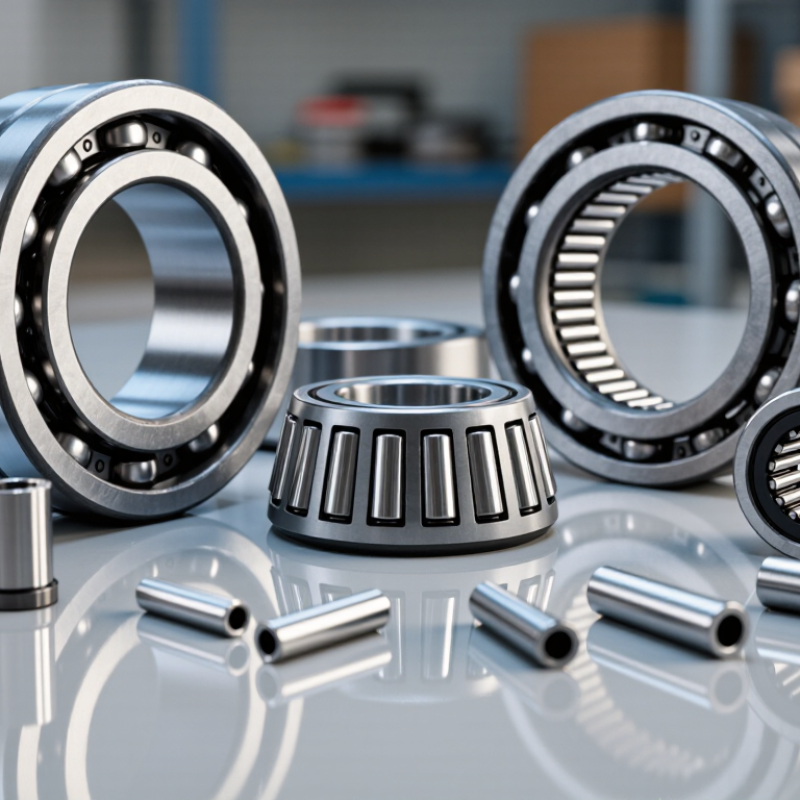
7 Tips for Buying Bearing Needles for Global Sourcing

Define Bearing Needle Types and Application Requirements

Choosing the right bearing needle begins with defining its type and working environment. Needle roller bearings use long, slender rollers to carry high radial loads in limited space. Common options include drawn-cup, machined-ring, caged, and full-complement designs. Each behaves differently under speed, shock, and lubrication conditions.

A drawn-cup bearing suits compact housings and moderate loads. A caged design reduces roller friction at higher speeds. Full-complement versions carry heavier loads but may generate more heat. Thrust needle bearings handle axial force, not radial force alone. This distinction is easy to miss.

Measure the available bore, housing diameter, and axial width before requesting quotations. Record the shaft hardness, surface finish, operating speed, load direction, temperature, and lubricant. A needle bearing running inside a dusty gearbox needs different protection from one used in a clean actuator. Seals, internal clearance, and corrosion resistance also deserve attention.

In practical sourcing, I have seen catalog dimensions match while the assembly still failed. The shaft had poor finish. That detail was overlooked. Ask suppliers for load ratings, tolerance data, material information, inspection records, and sample measurements. Confirm whether the bearing requires a hardened raceway or uses the shaft directly. When requirements remain uncertain, test a small batch under real load and temperature. The cheapest specification may become the most expensive mistake.

Verify Material Quality, Dimensions, and Load Ratings

7 Tips for Buying Bearing Needles for Global Sourcing

Material quality begins with traceability. Request the steel grade, heat-treatment record, cleanliness results, and batch number. ISO 683-17:2014 identifies requirements for bearing steels, including alloy composition and quality controls. Do not accept “premium steel” as evidence. Ask for an independent certificate and verify it against the production lot.

Measure diameter, length, roundness, and surface roughness at several points. One perfect sample proves little. ISO 199:2014 provides dimensional guidance for rolling bearings, while supplier drawings should define needle tolerances clearly. Check gauges and calibration dates. Then inspect random samples from different cartons. A common sourcing mistake is measuring only the first box. Packaging can hide mixed batches. It happens.

Load ratings need careful calculation. ISO 281:2007 defines the basic rating life L10 as the life reached by 90% of a group under identical conditions. For roller bearings, the exponent in the life equation is 10/3. ISO 76:2006 addresses static load ratings and permanent deformation risks. Compare the supplier’s dynamic rating, static rating, speed limit, lubrication assumptions, and operating temperature. Do not compare catalog numbers alone. Ask for test conditions. Also review needle hardness and residual stress data. A high load rating may fail under contamination, poor alignment, or inadequate lubrication. Leave room for uncertainty. Cite every assumption in the purchase specification.

Compare Suppliers, Certifications, and Manufacturing Capabilities

7 Tips for Buying Bearing Needles for Global Sourcing

When buying bearing needles, compare suppliers with the same technical checklist. Request diameter, length, roundness, surface roughness, hardness, and allowable variation. A polished sample can hide production weaknesses. Ask for inspection reports from several recent batches. Start with evidence. Confirm whether measurements use calibrated equipment and documented methods.

Certifications provide useful signals, but they do not replace verification. Check the scope and validity of ISO 9001 certification, rather than accepting a certificate image alone. For steel needles, request material certificates, heat-treatment records, and batch traceability. Environmental declarations may also matter for your market. Ask how the supplier controls restricted substances and manages nonconforming products. Do not guess. Contact the issuing body when documents seem unclear.

Manufacturing capability often decides long-term reliability. Review wire preparation, forming, heat treatment, centerless grinding, cleaning, and final sorting. Ask about equipment capacity, tooling maintenance, process controls, and backup machinery. A capable supplier should explain how it controls variation during high-volume production. Request a pilot batch before approving regular orders. Compare lead times, minimum quantities, packaging, and corrective-action response. One overlooked detail is packaging; loose needles can suffer scratches or mixed lots during transport. I once focused too heavily on unit price and underestimated inspection costs. That mistake changed my supplier evaluation process. A lower quotation is not always economical. Compare total quality risk, not only the invoice.

Evaluate Pricing, Minimum Orders, and Global Shipping Terms

Buying bearing needles for global sourcing requires more than comparing unit prices. Real purchasing work starts with a complete landed-cost view. Tip 1: Request tiered prices for samples, trial orders, and full production quantities. Tip 2: Ask whether tooling, inspection, packaging, or export documents create separate fees. A low quote can become expensive. Not every saving is real.

Tip 3: Check minimum order quantities against monthly usage and storage capacity. Tip 4: Negotiate mixed-size orders only when quality controls remain consistent. Tip 5: Confirm payment timing and currency exposure before approval. I once underestimated bank charges; the difference seemed small, but repeated orders made it visible. That mistake deserves attention. Leave room for demand changes.

Tip 6: Compare shipping terms carefully. Determine who handles freight, insurance, customs clearance, and destination delivery. Tip 7: Request written lead times for production and transit, including holiday delays. Ask for package dimensions and gross weight; a compact carton may reduce freight costs. Keep a buffer. Supplier claims are useful, but independent inspection and a pre-shipment sample provide stronger evidence. Recheck every assumption before signing.

7 Tips for Buying Bearing Needles for Global Sourcing

Evaluate pricing, minimum orders, and global shipping terms before selecting a supply option.

This planning chart compares common international procurement options using relative unit-cost index, typical minimum order quantity, and estimated transit time. Ocean freight generally supports the lowest unit cost for larger orders, while air and courier services reduce transit time but usually increase logistics cost. Confirm material grade, dimensional tolerance, packaging, Incoterms, duties, and final freight quotations with suppliers before placing an order.

Confirm Samples, Inspection Procedures, and Long-Term Support

Before buying bearing needles globally, request production samples from the exact material lot. Do not accept showroom pieces. Measure needle diameter, length, roundness, surface roughness, and hardness with calibrated equipment. Record the results beside the supplier’s drawing. ISO 2859-1 provides structured sampling guidance, but sampling cannot replace full inspection for critical assemblies. A small sample can miss an unusual defect.

Build the inspection procedure before placing a purchase order. Define gauge accuracy, inspection frequency, packaging checks, and rejection rules. Ask for material certificates, heat-treatment records, and traceability codes. The World Bearing Association has reported that counterfeit products may represent 5–10% of the global bearing market. That figure deserves caution, but it shows why traceability matters. Verify certificates independently when possible. Paperwork alone is weak evidence.

Long-term support should be tested before the first container ships. Ask how quickly the supplier handles dimensional deviations, corrosion claims, and replacement needs. Request a documented corrective-action report, not only an apology. The 2024 Global Industrial Bearings Market analysis by Grand View Research highlights automotive and industrial demand as major market drivers, increasing pressure on consistency and delivery. Still, forecasts are not guarantees. Your own incoming inspection remains essential. I would also repeat sample testing after six months, because process drift can appear quietly. Ask for change-notification commitments covering steel grade, lubricant, tooling, and subcontractors. Small details matter.

7 Tips for Buying Bearing Needles for Global Sourcing - Confirm Samples, Inspection Procedures, and Long-Term Support
Tip Sourcing Dimension Recommended Data to Confirm Inspection Procedure Required Evidence and Long-Term Support
1 Freeze the technical specification Confirm nominal needle diameter, needle length, quantity, chamfer or end geometry, material, hardness, surface finish, and applicable drawing revision.

Example RFQ format: 3.000 mm diameter × 10.000 mm length, with all dimensions subject to the approved drawing.
Measure diameter at a minimum of three axial positions and in two directions at each position. Measure length on a calibrated optical measuring system or suitable length gauge.

Record actual values rather than only “pass” or “fail.”
Request a signed drawing, revision-controlled specification, material designation, and a written deviation-approval process.

For needle rollers, ISO 3245 can be used as a reference for dimensional and geometrical requirements where applicable.
2 Confirm samples before mass production Set a sample quantity large enough to represent the proposed process. A practical starting point is 30 to 50 pieces per size for dimensional review, with additional pieces for destructive testing if required.

Confirm packaging, lot identification, and traceability before approval.
Inspect the samples using the same gauges and measurement method intended for production. Check diameter variation, length variation, end condition, straightness, burrs, rust, dents, and mixed sizes.

Do not approve samples based only on visual inspection.
Require a sample inspection report showing nominal size, measured minimum and maximum values, equipment identification, inspection date, and lot number.

Written approval should identify the exact sample lot and drawing revision.
3 Verify material and heat treatment Common bearing-roller materials include high-carbon chromium bearing steels such as 100Cr6 / AISI 52100-type material, but the specified grade must come from the engineering drawing.

Confirm hardness range, case or through-hardening requirement, retained austenite limit if specified, and decarburization limits.
Use a calibrated Rockwell or Vickers hardness method appropriate to the part size. Use positive material identification or laboratory chemical analysis when material identity is critical.

Metallographic examination may be required for microstructure, carbide distribution, and decarburization.
Request a material certificate, heat-treatment chart, hardness results, furnace or batch number, and traceability from raw material to finished lot.

ASTM E18 is commonly used for Rockwell hardness testing; the purchase specification should define the required method and limits.
4 Define inspection and sampling rules Separate critical characteristics from major and minor characteristics. Define the inspection level, sample size, acceptance number, and treatment of nonconforming pieces.

A practical control plan may include 100% visual sorting for burrs and rust, plus statistical sampling for dimensional characteristics.
Use calibrated micrometers, air gauges, length gauges, roundness equipment, or optical systems as appropriate. Establish gauge repeatability and reproducibility before production release.

Sampling plans may reference ISO 2859-1, but the AQL and inspection level must be agreed in the purchase order.
Require a control plan, inspection standard, calibration certificates, nonconformance report template, and corrective-action procedure.

Define who pays for reinspection, sorting, replacement, and expedited freight when a lot fails.
5 Check surface quality and cleanliness Specify allowable scratches, dents, laps, cracks, corrosion, grinding burns, burrs, and contamination. Define surface roughness only when it affects the application or is shown on the drawing.

Keep the storage and packaging requirement compatible with the specified corrosion-protection method.
Inspect under controlled lighting with defined magnification. Use magnetic-particle testing or another crack-detection method when required by the risk assessment.

Measure roughness with a calibrated profilometer when a surface-finish limit is specified.
Request representative inspection photographs, cleanliness records, corrosion-protection details, and packaging validation.

Packaging should prevent metal-to-metal impact, moisture exposure, and lot mixing during international transportation.
6 Validate packaging, labeling, and logistics Confirm pieces per inner package, total quantity per carton, carton dimensions, gross weight, moisture protection, desiccant requirements, and barcode or lot-label content.

For global shipments, define the delivery term, lead time, minimum order quantity, and acceptable partial-shipment rules.
Perform a packaging trial using the planned shipping configuration. Check for movement, abrasion, corrosion, crushed containers, missing labels, and quantity discrepancies after simulated handling.

Verify that each package can be traced back to one production lot.
Require a packing specification, commercial packing list, lot traceability list, certificate of conformity, and shipment photographs when requested.

Agree on a notification period for delays, shortages, damage, or customs documentation issues.
7 Secure long-term technical support Establish the service level for repeat orders, engineering changes, obsolete-size risk, emergency quantities, replacement stock, and complaint response.

Set measurable targets such as 48-hour initial response to a quality complaint and a documented corrective-action report within an agreed period.
Review performance by lot using delivery accuracy, dimensional rejection rate, defect rate, response time, and corrective-action closure.

Conduct periodic supplier reviews based on actual inspection and delivery data rather than price alone.
Require a named technical contact, escalation route, change-notification procedure, retained-sample policy, and record-retention period.

No material, heat-treatment, tooling, process, or sub-supplier change should occur without prior written approval when the change can affect form, fit, function, or traceability.

Note: Dimensional limits, hardness values, sampling plans, and acceptance criteria must be finalized against the approved engineering drawing and application requirements. The example values above are sourcing-control references, not universal limits for every needle roller.