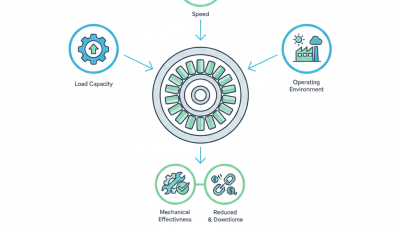
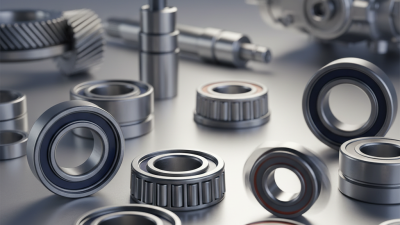
Choosing Bearing Needles for global sourcing requires more than comparing prices or reading a supplier catalogue. These small cylindrical components directly influence friction, load capacity, noise, and service life. A practical selection begins with the application: radial load, rotational speed, operating temperature, available space, and lubrication conditions. Needle diameter, length, roundness, surface finish, and hardness should match the bearing design and shaft requirements. Small errors matter.
Experienced purchasing teams normally request inspection reports, material certificates, dimensional records, and sample batches before approving production. For example, a 3 mm diameter needle with inconsistent roundness may create uneven contact inside a high-speed assembly. The risk might remain invisible during a short test but appear after extended operation. Suppliers should explain their heat-treatment process, grinding controls, packaging methods, and traceability system. Independent testing can also verify hardness, geometry, and cleanliness.
Global sourcing adds further considerations. Buyers must confirm production capacity, quality consistency, communication speed, export documentation, and realistic lead times. A low quotation may become expensive when rejected batches, delayed tooling, or emergency freight are included. Samples can mislead. A supplier may provide carefully selected pieces that do not represent normal production. Therefore, a documented first-article inspection and periodic audits provide stronger evidence. Standards and customer specifications should guide decisions, but neither replaces engineering judgment. No checklist is flawless. The best choice comes from combining measured data, supplier experience, application testing, and honest review of possible failure points.
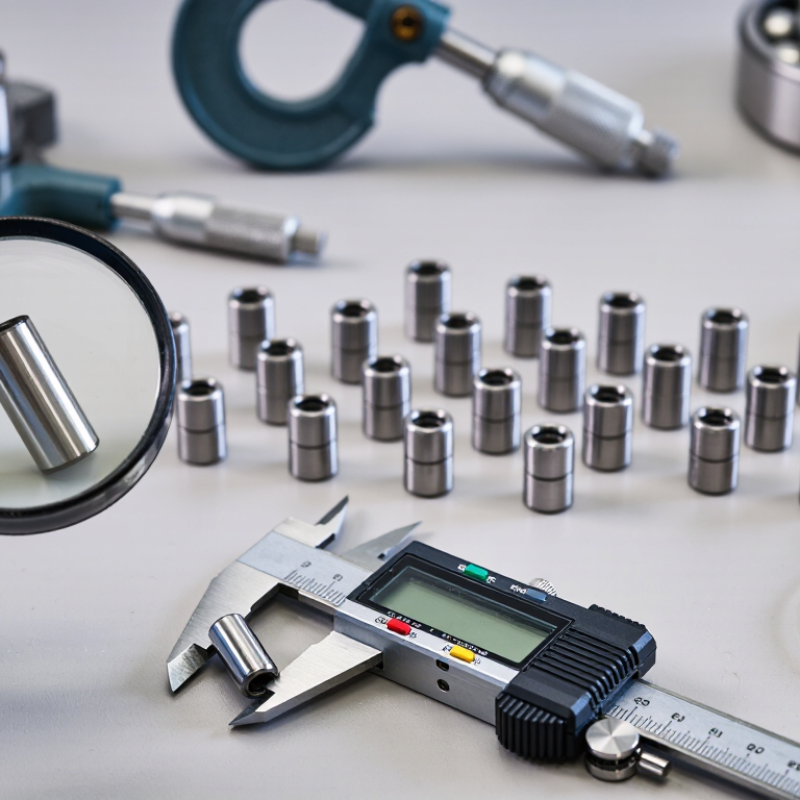
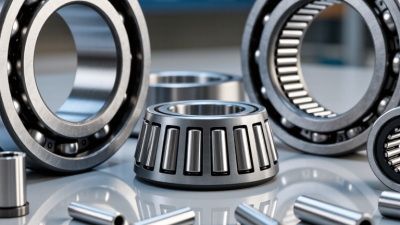
Bearing needle types determine whether a globally sourced component survives real operating conditions. Drawn-cup needles suit compact transmissions and small pumps. Solid needles handle heavier radial loads. Caged assemblies reduce friction at higher speeds, while full-complement designs prioritize load capacity. Thrust needle bearings manage axial forces in gearboxes and indexing mechanisms. Small differences matter.
Grand View Research’s 2024 Bearings Market report estimated the global market at about US$132 billion in 2023. That scale reflects demand from automotive, industrial machinery, robotics, and power equipment. In supplier evaluations, I would match each application to load, speed, temperature, lubrication, and available installation space. ISO 281 provides a common basis for dynamic load ratings and fatigue-life calculations. It should guide comparison, not replace testing.
For global sourcing, request dimensional drawings, material certificates, hardness results, and batch-level traceability. Confirm whether the supplier uses metric or inch tolerances. A 0.02-millimeter mismatch can stop a production line. Drawn-cup bearings may reduce cost and packaging space, but their housing fit must be controlled carefully. Solid types offer stronger support, yet they can raise machining and freight costs. I have seen buyers select by unit price alone. That shortcut often fails. Lead time, corrosion protection, lubrication compatibility, and inspection capability deserve equal attention. Supplier data can look complete and still hide weak process control.
Define bearing needle types by load direction, housing integration, alignment capability, and typical sourcing applications. The scores below are engineering-fit indicators from 1 (limited) to 5 (strong), not market-share data.
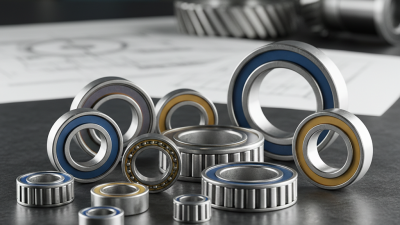
Drawn-cup needle roller bearings are well suited to compact, cost-sensitive radial applications such as transmissions and small gearboxes. Machined-ring bearings support higher loads and greater dimensional flexibility for industrial equipment. Needle roller and cage assemblies are useful where the shaft and housing can serve as raceways. Thrust needle bearings are selected primarily for axial loads, while track rollers are commonly used for cam mechanisms, linear guides, and automation systems. Final sourcing decisions should verify load, speed, lubrication, tolerance, sealing, and ISO dimensional requirements.
Global sourcing starts with the real load spectrum, not a catalog’s maximum value. Needle bearings suit high radial loads and compact housings. However, shock loads can quickly change the selection. Calculate the dynamic equivalent load from measured forces, duty cycles, and misalignment. ISO 281:2007 defines L10 life at 90% reliability. For roller bearings, life commonly follows L10 = (C/P)^(10/3) million revolutions. That exponent punishes optimistic load estimates. ISO 76:2006 bases static load ratings on approximately 4,600 MPa maximum Hertzian contact stress for rollers. Check permanent deformation after sudden loading.
Speed needs equal attention. Confirm the supplier’s limiting speed for the selected cage, lubricant, clearance, and shaft diameter. Continuous rotation differs greatly from short oscillating strokes. Record stroke angle, frequency, reversal acceleration, and dwell time. Heat can expose a poor choice. ASTM D3336 evaluates grease life under controlled temperature and speed, but its hours are test results, not guaranteed field life. Treat the number carefully. A practical sourcing request should include torque data, temperature maps, lubricant compatibility, and test conditions. I would also request dimensional inspection records from multiple production lots. One sample can look perfect. That is not enough. My own calculation would remain a screening tool until actual vibration, temperature, and wear data confirm it.
How to Choose Bearing Needles for Global Sourcing?
Select Suitable Materials, Sizes, Tolerances, and Surface Treatments
Choosing bearing needles requires more than matching a catalog dimension. In sourcing projects, I have seen small material differences change service life, noise, and assembly results. Hardened bearing steel suits many high-load applications, while stainless steel may perform better in humid environments. Always confirm hardness, cleanliness, and heat-treatment records with the supplier.
Tips: Define the needle diameter, length, and chamfer clearly. Check whether the size follows a recognized standard. Tolerance must match the shaft, raceway, and expected operating temperature. Extremely tight tolerances can increase cost without improving performance. Surface treatments also deserve practical testing. Black oxide, plating, or polishing may improve corrosion resistance or reduce friction, but compatibility with lubricant matters.
Ask for sample lots before approving global production. Measure several pieces, not just one. A perfect drawing can still hide a poor fit. I once found that a technically correct needle created uneven rotation because its surface finish differed between batches. That issue was not obvious during visual inspection. Review inspection equipment, batch traceability, packaging, and storage conditions. A supplier may promise consistency, but evidence is stronger. Leave room for rechecking your assumptions; the first specification is often incomplete.
| Selection Option | Typical Material | Typical Hardness | Recommended Diameter Range | Typical Diameter Tolerance | Roundness / Cylindricity Target | Surface Treatment | Best-Fit Operating Conditions | Global Sourcing Verification Points |
|---|---|---|---|---|---|---|---|---|
| Standard precision needle roller | Through-hardened chromium bearing steel, equivalent to 100Cr6 or AISI 52100 | 60–66 HRC | 1.0–6.0 mm diameter; length commonly 3–60 mm | Typical production target: ±0.0025 to ±0.005 mm, depending on diameter and grade | Usually ≤0.0025–0.005 mm for precision grades | Superfinished and lightly protected with rust-preventive oil | General-purpose radial needle bearings, automotive mechanisms, gearboxes, and industrial transmissions | Confirm steel certificate, heat-treatment batch, hardness profile, dimensional sorting method, and actual inspection records |
| High-load needle roller | Clean-melt through-hardened bearing steel, equivalent to 100Cr6 or AISI 52100 | 60–66 HRC | 2.0–8.0 mm diameter; length-to-diameter ratio typically up to about 5:1 | Typical production target: ±0.0025–0.005 mm | Usually ≤0.0025–0.005 mm | Fine grinding and superfinishing; optional black oxide for corrosion and running-in support | High radial load, oscillating motion, moderate shock loading, and compact bearing assemblies | Check effective case or through-hardening depth, retained austenite control, surface roughness, load rating, and roller sorting accuracy |
| Corrosion-resistant needle roller | Martensitic stainless bearing steel, commonly equivalent to 440C or X105CrMo17 | 58–62 HRC | 1.5–5.0 mm diameter; length commonly 3–40 mm | Typical production target: ±0.005–0.010 mm | Usually ≤0.005–0.010 mm | Polished or superfinished; passivation may be used after machining | Moisture exposure, laboratory equipment, food-processing machinery, medical mechanisms, and clean environments | Verify stainless grade, corrosion-test method, passivation process, magnetic requirements, and lower load capacity compared with standard bearing steel |
| Case-hardened needle roller | Low-carbon alloy case-hardening steel, such as a carburizing-grade chromium or chromium-molybdenum steel | Surface: 58–64 HRC; core: approximately 30–45 HRC | 3.0–10.0 mm diameter; length commonly 5–80 mm | Typical production target: ±0.005–0.010 mm | Usually ≤0.005–0.010 mm | Carburized or carbonitrided, followed by grinding and superfinishing | Heavy shock loads, impact-prone drives, joint mechanisms, and applications requiring a tougher core | Request effective hardened-layer depth, core hardness, distortion limits, carburizing atmosphere records, and post-treatment grinding allowance |
| Low-friction coated needle roller | Through-hardened bearing steel with a deposited carbon-based or hard ceramic coating | Base material: 60–66 HRC; coating hardness depends on coating system | 2.0–6.0 mm diameter; length commonly 5–50 mm | Base roller tolerance typically ±0.005 mm; coating thickness must be included in final size | Usually ≤0.005 mm after coating and finishing | Thin DLC-type, nitrided, or other engineered low-friction coating; application-specific qualification required | Poor lubrication, start-stop motion, high sliding component, or strict friction and wear requirements | Confirm coating thickness, adhesion, coefficient-of-friction test conditions, counterface compatibility, and dimensional change after coating |
| Black-oxide protected needle roller | Through-hardened chromium bearing steel, equivalent to 100Cr6 or AISI 52100 | 60–66 HRC | 1.5–8.0 mm diameter; length commonly 3–60 mm | Typical production target: ±0.005 mm | Usually ≤0.005 mm | Black oxide with a corrosion-preventive oil or sealing treatment | Moderate humidity, improved running-in, reduced glare, and applications where mild corrosion protection is useful | Confirm whether dimensions are measured before or after treatment, coating uniformity, oil compatibility, salt-spray expectations, and packaging protection |
| Nitrided needle roller | Alloy bearing or tool steel selected for nitriding compatibility | Surface commonly 900–1,200 HV; core hardness depends on the steel grade | 2.0–8.0 mm diameter; length commonly 5–60 mm | Typical production target: ±0.005–0.010 mm | Usually ≤0.005–0.010 mm | Gas or plasma nitriding, followed by controlled finishing when required | Wear-dominated applications, limited lubrication, moderate corrosion exposure, and repeated sliding contact | Verify compound-layer thickness, diffusion depth, white-layer control, dimensional growth, brittleness, and compatibility with the mating raceway |
| Matched-size needle roller set | Through-hardened chromium bearing steel, equivalent to 100Cr6 or AISI 52100 | 60–66 HRC | Diameter selected according to the bearing design; common range 2.0–6.0 mm | Matched group spread often specified at ≤0.002–0.005 mm | Usually controlled to the same grade as the individual roller | Superfinished and preserved with compatible rust-preventive oil | High-accuracy assemblies, thin-section bearings, precision pivots, and applications requiring uniform load distribution | Specify group size, batch traceability, sorting interval, maximum diameter variation, quantity per group, and mixing restrictions between lots |
Reliable bearing needles begin with a capable, transparent supplier. Review production experience, equipment, inspection capacity, and monthly output before discussing price. Ask for process flow charts, control plans, and sample inspection reports. A factory visit can reveal practical details, such as clean storage, calibrated gauges, and separated material batches. Video audits help, but they cannot replace physical verification.
Quality requirements must be measurable. Specify diameter, length, roundness, surface roughness, hardness, and allowable variation. Request material certificates linked to each production batch. Independent testing can verify hardness, composition, and fatigue performance when applications are demanding.
ISO 9001 certification supports process control, but certification alone proves little. Check its validity, audit scope, and corrective-action records. Regional chemical and product requirements should also be confirmed before shipment.
Traceability protects the supply chain when defects appear. Each carton should show the batch number, production date, material heat number, and inspection status. Digital records should connect these details to raw materials, operators, machines, and test results. Keep approved samples for comparison.
Do not skip incoming inspection, even after successful trials. That assumption can become expensive.
In one sourcing review, the dimensions passed, but inconsistent packaging caused surface damage during transport. The supplier corrected the packaging, yet the lesson remained: quality includes handling, documentation, and delivery discipline.
Supplier scorecards should track defects, response time, delivery accuracy, and recurring problems. Improvement is rarely perfect.
Choosing bearing needles globally requires more than comparing unit prices. Calculate the total landed cost, including tooling, packaging, inspection, insurance, duties, and inland delivery. A lower quotation may become expensive after port storage or urgent air freight. Request production samples and measure diameter, length, surface finish, and hardness against the approved drawing. Small variations can increase friction and shorten service life.
Lead time deserves equal attention. Confirm raw material availability, monthly capacity, inspection schedules, and shipping routes before placing an order. Ask for a realistic production calendar, not an optimistic estimate. One delayed container can stop an assembly line for days. Keep safety stock based on actual consumption, transit time, and customs uncertainty. Local holidays and port congestion can change the plan quickly. They often do.
Tips: Compare at least three landed-cost scenarios. Test samples under real load conditions. Audit process records when possible. Request a backup production plan. Check whether packaging prevents rust during long ocean transit. Review supplier communication during the quotation stage; slow, unclear replies may signal future delays. Do not rely on one successful sample. Batch consistency matters more. Recheck assumptions every quarter, because freight rates, capacity, and demand can shift. The cheapest source is not always the safest source. Sometimes, a slightly higher price protects continuity.