Choosing a Pillar Bearing supplier is not simply a matter of comparing prices. Global buyers must examine load capacity, housing material, shaft tolerance, lubrication, and delivery consistency. A small detail can cause a large production delay.
Tedric A. Harris, a respected bearing analyst and author, emphasized a practical principle: “Bearing life depends on the complete application, not the bearing alone.” This view remains valuable when evaluating manufacturers. A reliable supplier should explain how its Pillar Bearing products perform under radial loads, vibration, moisture, and temperature changes. Buyers should also request dimensional drawings, material certificates, inspection records, and installation guidance. Clear answers matter.
This guide introduces ten Pillar Bearing manufacturers serving international markets. It considers product range, engineering experience, quality systems, customization ability, export support, and after-sales responsiveness. Some companies excel in heavy machinery. Others focus on agricultural equipment, conveyor systems, or compact industrial assemblies. Their strengths are not identical.
No ranking is perfect. Market information changes. Regional service can also be difficult to measure from a distance. Therefore, buyers should verify current certifications, production capacity, lead times, and warranty terms before ordering. A polished website is not enough. Ask for samples. Check the fit. Review the grease passage and set-screw quality. These practical steps often reveal more than promotional claims.
The right supplier should deliver more than a bearing. It should provide stable performance, traceable manufacturing, and useful technical support. That difference becomes clear when machines run continuously, far from the supplier’s factory.
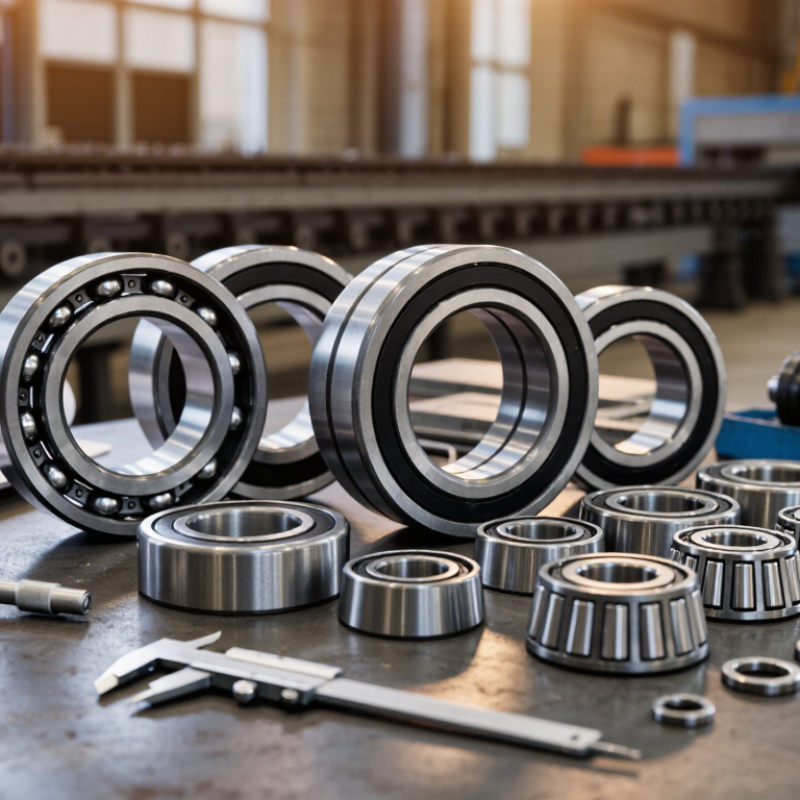
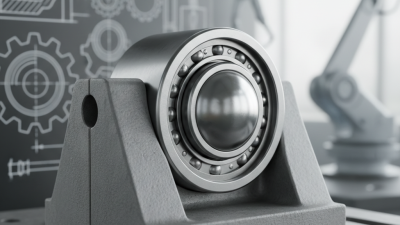
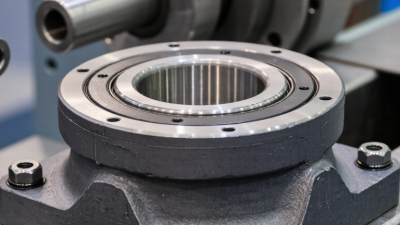
A pillar bearing is a bearing unit fixed to a vertical support or mounting structure. It helps a rotating shaft carry radial loads while maintaining stable alignment. Depending on the design, it may include a housing, rolling element, seals, and grease lubrication. Some models also tolerate limited shaft misalignment, but this ability has practical limits.
For global buyers, the bearing matters because it affects vibration, maintenance intervals, and equipment uptime. A poorly aligned unit can heat quickly, mark the raceway, and loosen nearby fasteners. In a conveyor frame, even a small installation error may create visible noise after several operating hours.
Check the shaft diameter, static load, dynamic load, operating speed, and temperature before comparing suppliers. Sealing quality matters in dusty workshops. So does grease compatibility.
When reviewing China’s top pillar bearing manufacturers, ask for material certificates, dimensional inspection records, and load-test procedures. Experienced suppliers should explain clearance, housing hardness, lubrication options, and mounting tolerance in clear language.
Request sample units before placing a large order. Measure the bore and mounting holes yourself. Catalog drawings can be accurate, but they are not proof of production consistency.
I have seen buyers focus on price while overlooking replacement seals and delivery packaging. That mistake becomes expensive later. A reliable supplier also communicates limits honestly, rather than promising one bearing for every machine.
China’s pillar bearing industry serves global markets through scale, engineering depth, and flexible production. The China Bearing Industry Association reported that China’s bearing sector generated more than RMB 270 billion in main business revenue in 2023. This large industrial base supports tooling, heat treatment, grinding, sealing, and inspection under one supply network.
For overseas buyers, the advantage is practical.
A qualified factory can produce pillar bearings with controlled bore tolerances, hardened races, and sealed designs for dusty workshops. Many suppliers also support ISO 9001 systems, dimensional reports, material certificates, and batch traceability. UN Comtrade data shows China remains one of the world’s major exporters of bearings and related components. That export experience helps manufacturers manage container packing, customs documents, and regional technical requirements.
However, production volume does not guarantee consistent quality. The data usually describes the wider bearing industry, not pillar bearings alone. Buyers should therefore audit process control, test samples at operating loads, and confirm corrosion protection before signing long-term contracts. Small differences in shaft alignment can create noise, heat, and early wear. Some suppliers still rely too heavily on final inspection. That is a weakness worth questioning. A reliable partnership needs clear drawings, repeatable inspection records, and honest communication when a tolerance cannot be maintained.
Selecting China’s top pillar bearing manufacturers requires more than comparing quoted prices. Examine production experience, engineering depth, and evidence of stable quality. A capable supplier should explain load ratings, housing materials, sealing options, and operating temperature limits clearly. Vague technical answers deserve caution.
Request material certificates and batch traceability. Check whether each bearing receives dimensional inspection, hardness testing, and rotation testing. Ask for inspection records from recent orders, not only polished sample reports. Factory audits can reveal practical details, such as clean assembly areas, calibrated measuring tools, and organized storage. Small details matter.
Review the manufacturer’s tooling and machining capacity. Consistent bore and shaft alignment are essential for smooth operation. Confirm annual capacity, minimum order quantities, packaging methods, and lead times in writing. A reliable exporter should also provide accurate customs documents and responsive after-sales support. Communication is evidence.
Do not accept every factory claim immediately. Even experienced manufacturers may face tolerance drift during busy production periods. Ask how rejected parts are isolated and corrected. Sample testing should include your actual load, speed, and installation conditions. A low-cost sample can become expensive after field failure. Price matters, but predictable performance matters more. Personally inspecting a facility is useful, although it cannot replace independent testing. Some suppliers communicate well but lack deep engineering support. That weakness may appear only after the first large shipment.
| Rank | Anonymous Manufacturer Profile | Evaluation Score | Estimated Annual Bearing Capacity | Quality & Compliance Systems | Typical Pillar Bearing Range | Inspection and Testing Capability | Typical Export Coverage | Typical Standard Lead Time | Best Buyer Fit |
|---|---|---|---|---|---|---|---|---|---|
| 1 | Profile 01 High-volume precision production specialist |
94/100 | 8–12 million pieces | ISO 9001 ISO 14001 IATF 16949 available for selected lines | Standard and flanged pillar bearings; chrome steel and stainless-steel options; metric and inch sizes | Dimensional inspection, hardness testing, radial-clearance measurement, vibration screening, noise testing, and batch traceability | Europe, North America, Southeast Asia, Middle East, and South America | 20–35 days | Large OEM programs requiring stable repeat production and documented quality control |
| 2 | Profile 02 Customized bearing and assembly supplier |
92/100 | 4–7 million pieces | ISO 9001 ISO 14001 Customer-specific PPAP support | Pillar bearings with special housings, seals, lubrication, mounting holes, and corrosion-resistant finishes | Material certificates, dimensional capability studies, torque testing, seal verification, grease compatibility checks, and first-article inspection | Western Europe, North America, Australia, Japan, and South Korea | 25–45 days | Engineering-led buyers needing modified designs or application-specific assemblies |
| 3 | Profile 03 Automotive and industrial-grade producer |
90/100 | 6–10 million pieces | ISO 9001 IATF 16949 Process-control documentation | High-load pillar bearings for conveyors, agricultural machinery, material-handling systems, and vehicle-related applications | Roundness, surface roughness, hardness, load testing, life testing, vibration analysis, and statistical process control | Europe, Mexico, Southeast Asia, Turkey, and the Middle East | 30–50 days | Industrial and automotive buyers prioritizing process consistency and service life |
| 4 | Profile 04 Stainless-steel and corrosion-resistant specialist |
88/100 | 1.5–3 million pieces | ISO 9001 RoHS and REACH documentation available | Stainless-steel pillar bearings, polymer-sealed units, washdown-duty designs, and food-processing equipment configurations | Salt-spray testing, corrosion inspection, seal integrity testing, dimensional checks, hardness verification, and grease compatibility evaluation | North America, Europe, Australia, New Zealand, and coastal industrial markets | 30–55 days | Food equipment, packaging machinery, clean production, and corrosive environments |
| 5 | Profile 05 High-mix, low-volume production partner |
86/100 | 0.8–2 million pieces | ISO 9001 Incoming-material inspection and supplier controls | Wide size coverage, special bore dimensions, non-standard housings, and small-batch pillar bearing orders | Coordinate measuring machine inspection, runout checks, bearing-play measurement, visual inspection, and sample endurance testing | Europe, North America, India, Southeast Asia, and Africa | 25–45 days | Distributors and machinery builders requiring flexible quantities and broad specifications |
| 6 | Profile 06 Cost-efficient standard bearing manufacturer |
84/100 | 5–9 million pieces | ISO 9001 Standardized production and final inspection procedures | Common metric pillar bearings for conveyors, fans, agricultural equipment, pumps, and general machinery | Dimensional inspection, hardness testing, clearance checks, grease filling control, noise testing, and packaging inspection | Southeast Asia, Africa, South America, Eastern Europe, and the Middle East | 20–40 days | Importers and distributors seeking competitive pricing for established standard models |
| 7 | Profile 07 Conveyor and material-handling application supplier |
82/100 | 2–5 million pieces | ISO 9001 Application testing and batch-control records | Pillar bearings for belt conveyors, rollers, agricultural conveyors, warehouse equipment, and bulk-material systems | Rotational torque, misalignment tolerance, load testing, sealing checks, vibration testing, and operating-temperature evaluation | Europe, North America, Australia, Central Asia, and the Middle East | 30–50 days | Bulk handling and logistics equipment buyers needing durable field performance |
| 8 | Profile 08 Private-label and export packaging supplier |
80/100 | 2–4 million pieces | ISO 9001 Export packaging and labeling controls | Standard pillar bearings, mounted units, customized cartons, multilingual labels, and distributor-oriented product sets | Incoming steel inspection, dimensional sampling, noise and vibration checks, visual inspection, and packaging drop tests | Europe, North America, Latin America, Africa, and Southeast Asia | 25–45 days | Wholesalers and regional distributors requiring private-label packaging and mixed containers |
| 9 | Profile 09 Small and medium machinery component supplier |
78/100 | 0.5–1.5 million pieces | ISO 9001 Basic process and final inspection records | Small and medium pillar bearings for agricultural tools, light conveyors, textile equipment, and compact machinery | Bore and outside-diameter measurement, clearance testing, hardness checks, seal inspection, and sample running tests | Southeast Asia, South Asia, Africa, Eastern Europe, and South America | 30–60 days | SMEs and maintenance suppliers with moderate volumes and price-sensitive applications |
| 10 | Profile 10 Prototype and rapid-development bearing supplier |
76/100 | 0.3–1 million pieces | ISO 9001 Prototype inspection and engineering-change control | Prototype pillar bearings, limited-run components, special materials, revised seal designs, and development samples | First-article inspection, dimensional reports, material verification, basic load testing, seal checks, and engineering sample approval | Europe, North America, Southeast Asia, and domestic industrial markets | 15–35 days for samples | Product developers and machinery startups requiring fast samples and design iteration |
| Recommended buyer checks: verify the current certificate scope, inspect production and heat-treatment records, request material and dimensional reports, confirm bearing clearance and seal specifications, conduct pre-shipment inspection, and validate samples under the intended load, speed, temperature, and contamination conditions. | |||||||||
China’s Top 10 Pillar Bearing Manufacturers Compared
China’s leading pillar bearing manufacturers serve automation, packaging, textile, agricultural, and material-handling equipment markets. Their product ranges commonly include stainless steel, chrome-plated, and polymer-housed bearing units. Buyers should compare more than catalog size. Shaft tolerance, housing rigidity, sealing design, and grease compatibility directly affect service life.
Several manufacturers stand out through documented production controls and stable export experience. Reliable factories usually show ISO-based quality procedures, incoming material checks, automated grinding, and dimensional inspection reports. Ask for hardness data, radial clearance values, load ratings, and sample test records. A practical supplier should explain how its bearings perform in dusty workshops, washdown areas, or temperature changes. Small details matter.
Price comparisons can mislead. A cheaper unit may use thinner housing material or inconsistent seals. Factory visits, video inspections, and trial orders reveal more than polished brochures. Communication quality also deserves attention; unclear answers often become costly delays. Still, no comparison is perfect. Published rankings may favor export volume, while a smaller manufacturer could offer better customization or faster technical support. Buyers should verify claims against drawings, samples, and independent inspection results before placing larger orders.
A practical evaluation framework for global buyers. The weighting reflects the main technical, quality, supply-chain, and commercial factors commonly used when screening pillar bearing suppliers. It is not a ranking of individual companies.
Technical performance receives the highest weighting because bearing selection depends primarily on load capacity, service life, dimensional accuracy, and protection against operating conditions. Buyers should verify these factors through ISO-based documentation, inspection records, samples, and application testing.
For global buyers comparing China’s top ten pillar bearing manufacturers, export compliance should come before price. ISO 492 defines dimensional and running accuracy classes for rolling bearings. ISO 281 provides the basic rating-life method. Buyers should request tolerance records, material certificates, and batch traceability before approval. These documents matter when bearings face vibration, dust, or continuous loading.
Quality control needs measurable evidence. The ISO Survey 2022 reported more than 1.26 million ISO 9001 certificates worldwide, but certification alone cannot prove product consistency. Ask for steel-mill certificates, hardness results, surface-finish data, and noise-test records. Check whether samples match mass-production batches. A factory may pass an audit and still produce uneven results. That uncomfortable possibility deserves attention.
Tips: Compare at least three recent inspection reports. Confirm whether tests follow ISO or ASTM methods. Review packaging against moisture, impact, and customs requirements. The 2023 World Bank Logistics Performance Index assessed 139 economies and highlighted logistics reliability as a key trade factor. Therefore, buyers should examine shipment history, lead-time records, spare-part planning, and claim response times. Clarify RoHS and REACH documentation where applicable. Also confirm country-of-origin marking and tariff classification with an independent customs specialist. Small paperwork gaps can delay a technically excellent shipment.