Welcome to our websites!

Who Are the Top Front Bearing Manufacturers in China?

China is a major source of bearings for automotive, industrial, and machinery markets. Buyers comparing Front Bearing manufacturers need more than a broad product catalog. Fit, load capacity, sealing, and operating temperature can all affect service life. Small details matter. A bearing that suits a light-duty assembly may not perform well under heavy loads or frequent vibration. The right choice depends on the application, not just the quoted price.

This guide introduces leading Chinese manufacturers and the capabilities buyers may want to examine. It considers product range, manufacturing experience, inspection practices, customization, and communication. Useful evidence can include dimensional inspection records, material specifications, and details about noise or vibration testing. Claims still deserve scrutiny. A polished website cannot show how consistently a factory controls production across different batches. Buyers should confirm technical requirements directly and request documents relevant to their application. That step takes time. It can prevent costly mismatches later. No single ranking fits every purchaser, because order volume, delivery expectations, and support needs vary. The overview is a starting point, not a substitute for supplier verification or engineering review.

Who Are the Top Front Bearing Manufacturers in China?

What Front Bearings Are and How They Function

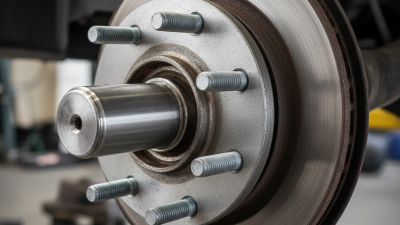
A front bearing supports the wheel hub and lets the wheel rotate with minimal friction. In many modern cars, the bearing is built into a sealed hub assembly. Inside, hardened steel balls or rollers move between precisely shaped raceways. Grease stays enclosed, while seals help keep water and road grit out.

The bearing carries more than the vehicle’s weight. It also handles cornering forces, braking loads, and bumps transmitted through the tire. That matters. A worn bearing may produce a steady hum that changes with speed or when the vehicle turns. Some faults create play at the wheel, though noise alone cannot confirm the cause. Other parts can sound similar.

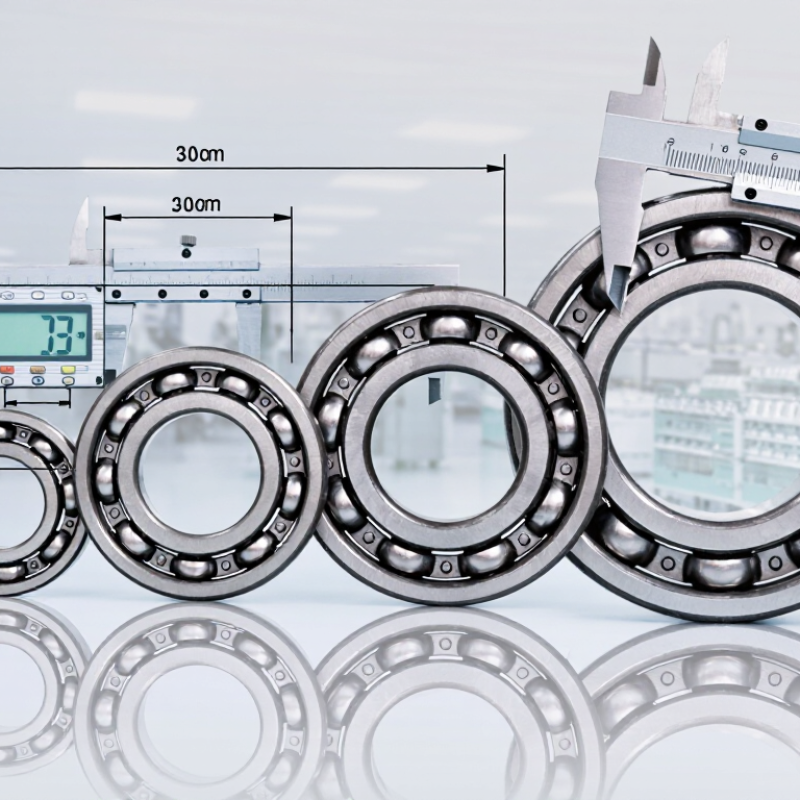
For manufacturers, consistent heat treatment, accurate machining, and controlled assembly are central to reliable performance. Buyers and technicians can compare load ratings, dimensions, sealing design, materials, and traceable quality records. Fitment must match the vehicle’s hub and sensor arrangement. Not always simple. A bearing can look correct yet differ in internal clearance or encoder design, so measurements and vehicle specifications deserve careful checking.

How to Assess Front Bearing Manufacturers in China

Assessing a front bearing manufacturer starts with traceable evidence, not a polished sample. The China Bearing Industry Association’s 2022 industry statistics reported 25.9 billion bearing units produced and 223.8 billion yuan in sector revenue. These figures describe the broader bearing industry, not front bearings specifically. Treat them as context, not proof of a supplier’s capability. Ask for material certificates, batch records, and documented checks for dimensions, runout, clearance, and noise. Numbers need context.

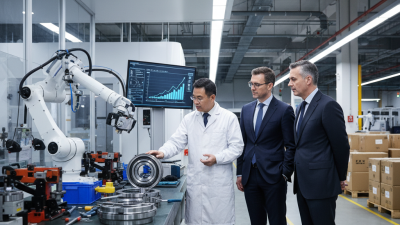
Review whether the factory controls heat treatment, grinding, and assembly across production lots. Request inspection records from several batches, then compare results with your drawing and operating conditions. A supplier should explain how it handles rejected parts and process changes. For a physical audit, inspect clean storage, calibrated gauges, and sealed packaging; these details can reveal weak controls. A practical test plan should include load, temperature, and endurance conditions relevant to the vehicle application. One successful sample proves little. I would not rely on it alone; that is an easy mistake. Ask an independent testing laboratory to verify critical results when the purchase risk justifies the cost.

How to Assess Front Bearing Manufacturers in China

The chart shows an illustrative buyer-assessment weighting, not market statistics or a ranking of manufacturers. Use it to compare suppliers based on documented quality controls, product testing, traceability, technical support, and delivery performance. Verify each supplier’s evidence and adjust the weights to suit your application.

Leading Front Bearing Manufacturers in China

Leading front bearing manufacturers in China should be assessed by engineering capability, process control, and application fit—not production volume alone. Front assemblies face radial loads, impacts, heat, and water spray near the wheel. China’s vehicle output provides useful market context: the China Association of Automobile Manufacturers reported 30.16 million vehicles produced in 2023. That figure signals substantial demand, but it does not prove bearing quality. Buyers should compare dimensional accuracy, sealing design, load testing, and traceability.

Established suppliers commonly offer wheel-hub units, tapered roller bearings, or deep-groove designs for different vehicle platforms. Ask for test records covering noise, vibration, temperature, and fatigue life. Review how the factory handles steel inspection, heat treatment, and final assembly. These details reveal more than a catalogue. I would still verify performance with sample testing; published specifications can look convincing while leaving real-world fitment questions unanswered.

Tips: Match the bearing to the vehicle’s load and operating conditions. Request inspection records and a clear warranty scope. Check sample fit before placing a large order.

How Chinese Manufacturers Differ in Products and Capabilities

Chinese front-bearing manufacturers differ less by location than by product focus and process control. Some specialize in sealed, unitized wheel-hub assemblies, while others supply separate bearing components for specific vehicle designs. A hub unit may combine the bearing, flange, seals, and an encoder for the anti-lock braking system. This can simplify installation, but it also makes dimensional accuracy and encoder consistency especially important.

Manufacturing capabilities vary. One supplier may offer broad vehicle coverage and flexible production runs; another may invest more heavily in automated grinding, heat-treatment monitoring, and endurance testing. Ask how runout, noise, sealing, and material hardness are checked—not just whether a factory has modern equipment. I would not judge quality from a polished catalog alone. Production records and sample-test results offer more useful evidence, though they still do not guarantee every batch will perform identically.

Tips: Confirm the exact vehicle application, bearing dimensions, encoder type, and connector details before comparing quotes. Request inspection criteria and traceability information for the delivered batch. Small mismatches matter. A bearing that fits the housing may still have the wrong signal pattern or seal design.

Who Are the Top Front Bearing Manufacturers in China? — How Chinese Manufacturers Differ in Products and Capabilities

Capability comparison of common Chinese front-wheel-bearing manufacturer profiles, based on product architecture, manufacturing processes, quality systems, and supply-chain coverage.

Manufacturer Profile Primary Front-Bearing Products Wheel-Bearing Generation Typical Manufacturing Strength Sealing and Lubrication ABS and Sensor Integration Applicable Technical Standards Quality and Validation Capability Best-Fit Buyer
High-Volume Standard Bearing Producer Single-row ball bearings Double-row ball bearings Tapered roller bearings Mainly first-generation and selected second-generation assemblies for passenger cars and light commercial vehicles. Automated grinding, superfinishing, heat treatment, assembly, and batch production for standardized sizes. Contact or non-contact seals; factory-filled automotive grease selected for temperature and speed requirements. Usually supplies non-sensor versions; magnetic encoder options may be available for selected applications. ISO 15 for boundary dimensions, ISO 492 for bearing tolerances, and application-specific OEM drawings. In-process dimensional inspection, vibration and noise testing, hardness testing, and lot traceability. Aftermarket distributors and buyers requiring competitive pricing for established vehicle applications.
Integrated Hub-Unit Specialist Second-generation hub units Third-generation hub units Flanged assemblies Second- and third-generation wheel-end units with integrated flanges, mounting features, and pre-adjusted internal clearance. Precision forging or machining of flanges, controlled press-fitting, preload control, and automated assembly stations. Integrated seals and pre-packed grease reduce installation steps and help protect against water and road contamination. Active magnetic encoder rings and passive or active speed-sensor interfaces can be integrated into the hub assembly. ISO 492 tolerances, ISO 1101 geometric tolerancing principles, and vehicle-specific interface specifications. End-of-line torque testing, runout measurement, rotational drag testing, sensor signal testing, and durability validation. Vehicle repair networks, private-label aftermarket programs, and customers seeking a ready-to-install wheel-end unit.
Automotive OEM-Oriented Manufacturer Wheel-end bearings Hub-bearing units Customized assemblies Products may cover first-, second-, and third-generation designs according to vehicle platform requirements. Process engineering, production-line automation, controlled assembly conditions, and product-specific manufacturing plans. Seal design, grease selection, and internal clearance are developed according to load, speed, temperature, and contamination targets. Sensor-ready designs, encoder polarity control, connector customization, and electronic signal verification. IATF 16949-based automotive quality management, APQP, PPAP, FMEA, MSA, SPC, and customer-specific requirements. Bench durability testing, thermal cycling, water-ingress testing, noise analysis, torque testing, and dimensional capability studies. Vehicle manufacturers, Tier 1 suppliers, and buyers needing engineering support and long-term platform supply.
Export-Focused Aftermarket Manufacturer Replacement wheel bearings Hub assemblies Repair kits Broad coverage of current and older vehicle applications, including replacement equivalents for common service parts. Flexible production lines, multi-size machining, private-label packaging, and short-to-medium production runs. Sealed-for-life configurations are common; grease fill and sealing materials are selected for aftermarket operating conditions. Sensor-equipped and non-sensor versions are commonly offered, subject to vehicle application and catalog requirements. ISO 9001 quality systems are common; product requirements are normally matched to catalog specifications and applicable standards. Incoming material inspection, sampling inspection, noise testing, packaging checks, and application cross-reference control. Importers, distributors, e-commerce sellers, and private-label brands requiring application breadth and packaging flexibility.
Heavy-Duty and Commercial-Vehicle Specialist Tapered roller bearings Heavy-duty hub bearings Trailer wheel-end parts Primarily tapered roller and robust hub-bearing designs for trucks, buses, trailers, and off-highway applications. Heavy-section steel processing, high-load heat treatment, precision raceway grinding, and controlled bearing preload. High-load grease systems and seals designed for contamination resistance, shock loads, and extended service intervals. Sensor integration is application-dependent and less universal than in passenger-car hub units. ISO 15, ISO 492, ISO 355 for tapered roller bearing dimensions, and vehicle-specific load and interface requirements. Static load checks, rotational torque testing, endurance testing, hardness verification, and dimensional inspection under load. Commercial-vehicle fleets, trailer-part distributors, agricultural-equipment suppliers, and heavy-duty repair channels.
Engineering and Low-Volume Custom Manufacturer Prototype bearings Special flanges Modified internal designs Customized first-, second-, or third-generation concepts developed for special vehicle platforms or non-standard interfaces. Flexible tooling, CNC machining, rapid sample preparation, design modification, and small-batch production. Seal materials, grease type, internal clearance, and preload can be adapted to the operating environment. Encoder and sensor features can be developed when drawings, signal requirements, and validation targets are provided. Customer drawings, ISO 492 tolerance grades, geometric tolerancing, and documented engineering change control. Prototype measurement reports, material certificates, failure analysis, application testing, and design-for-manufacturing feedback. Engineering buyers, specialty vehicle producers, prototype developers, and customers with non-standard fitment requirements.
Cost-Optimized Volume Supplier Common replacement bearings Basic hub assemblies Standard repair kits Concentrates on high-demand vehicle applications and standardized replacement dimensions. High utilization of standardized components, repeatable processes, and simplified product configurations. Standard automotive seals and pre-filled grease; material and design choices are usually optimized for target cost. Basic sensor-ready products may be available, while advanced encoder or connector customization is more limited. Product dimensions are generally aligned with applicable ISO requirements and customer-approved technical drawings. Routine dimensional inspection, batch sampling, visual checks, packaging inspection, and basic noise testing. Price-sensitive aftermarket programs where application coverage, lead time, and packaging cost are priorities.

Note: The profiles describe common capability categories in China rather than named companies. Actual specifications, certifications, production capacity, test results, and vehicle coverage should be verified through technical drawings, audit records, sample testing, and customer-specific documentation.

How to Select a Front Bearing Supplier for Your Needs

Selecting a front bearing supplier in China requires more than comparing unit prices. Start with the bearing’s working conditions: radial load, speed, temperature, moisture, and available space. A supplier should explain how its material, heat treatment, clearance, and seal design match those conditions. Ask for measured tolerances, noise limits, fatigue testing, and batch traceability. Vague claims are warning signs. Request inspection records, not polished promises.

Before placing a large order, test samples on your actual shaft and housing. Check fit, rotation noise, vibration, grease leakage, and temperature after several operating hours. Ask whether production uses calibrated gauges and documented process controls. Factory audits can reveal storage problems, mixed batches, or weak final inspection. Small details matter.

Confirm minimum order quantity, tooling charges, replacement policy, export packaging, and realistic lead times in writing. A capable supplier will discuss failure analysis when results are poor, rather than blame installation immediately. Certification can support credibility, but it should match the product and remain verifiable.

Price still matters, yet the cheapest bearing may create downtime, rework, and hidden maintenance costs.

I would not treat any checklist as perfect; application data can be incomplete, and supplier answers may change between samples and mass production. Keep one approved sample, define acceptance limits, and review the first production batch carefully.