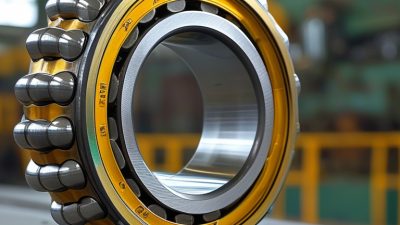
Global buyers need more than a familiar logo when selecting an Auto Bearing manufacturer. Vehicle production remains enormous. OICA reported 93.5 million motor vehicles produced worldwide in 2023. That volume supports demand for wheel, transmission, engine, and electric-drive bearings. The International Energy Agency recorded nearly 14 million electric-car sales in 2023. Electric vehicles represented about 18% of global car sales. This transition changes the technical brief. Bearings must handle compact packaging, higher speeds, electrical currents, and quieter cabins.
Market reports do not always agree. Grand View Research and Fortune Business Insights publish different automotive bearing forecasts because their definitions, regions, and product categories vary. That difference matters. A reliable comparison should examine manufacturer revenue, production locations, aftermarket coverage, and documented testing. SKF’s Annual Report 2023 and The Timken Company’s 2023 Form 10-K show how leading suppliers report industrial capacity, regional exposure, and engineering investment. These primary sources are more useful than unsupported online rankings. Certification also deserves attention. ISO 9001 supports quality management, while IATF 16949 is especially relevant for automotive supply chains. Buyers should request material certificates, dimensional inspection records, fatigue data, and batch traceability.
This guide compares prominent manufacturers through those practical signals. It considers NSK, NTN, JTEKT, SKF, Schaeffler, Timken, and other established suppliers. Availability matters. So does technical support. A bearing that fits on paper may still fail under contamination, misalignment, or poor installation. No ranking is perfect. Supplier performance can vary by plant, market, and product family. Buyers should verify current certifications, lead times, warranty terms, and local compliance before placing orders. Small details often decide the result.
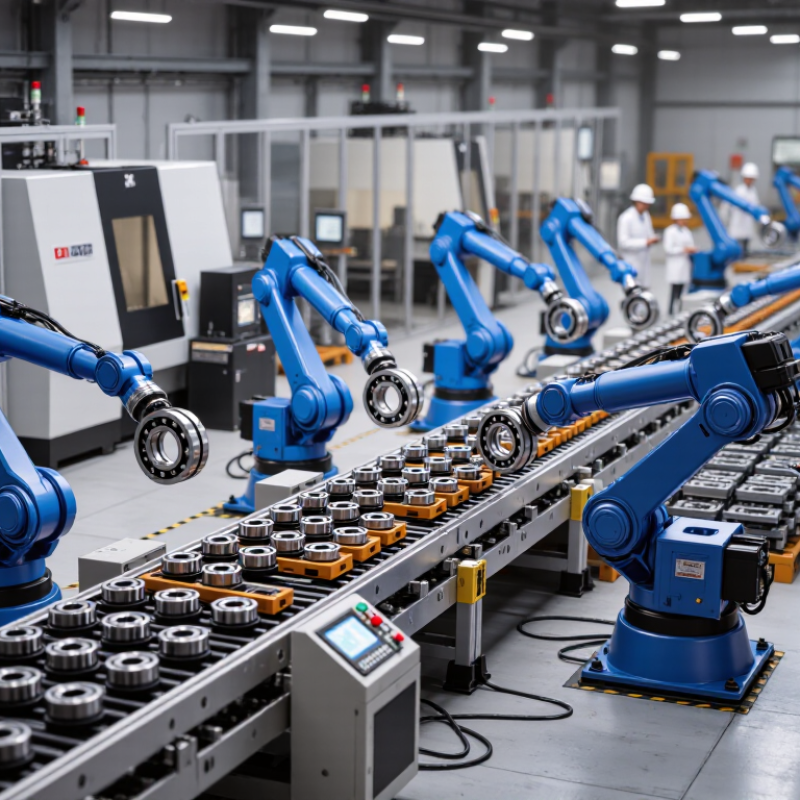
Automotive bearings are precision components that let wheels, shafts, and gears rotate with controlled friction. They carry radial and axial loads while facing heat, vibration, moisture, and road contamination. A small surface defect can become noise, uneven tire wear, or a dangerous loss of smooth rotation.
Their importance is measurable. The International Energy Agency reported nearly 14 million electric cars were sold worldwide in 2023.
These vehicles use high-speed electric motors, where bearing accuracy affects efficiency, temperature, and driving range. The U.S. Department of Energy also identifies friction reduction as an important path toward better vehicle energy efficiency. Bearing performance matters beyond fuel use. It influences comfort, maintenance intervals, component life, and manufacturing costs. Yet “maintenance-free” is not always realistic. Installation errors, poor sealing, or unsuitable grease can still shorten service life.
Tips: Check load ratings, clearance, sealing design, and operating temperature before purchasing. Ask for dimensional inspection records and material certificates. For wheel applications, compare real road conditions with laboratory data. A cheaper bearing may fit perfectly but fail early under dust, water, or repeated impact. Buyers should also review ISO-based quality procedures and traceability documents. These details are easy to overlook. They deserve more attention.
Top Auto Bearing Manufacturers for Global Buyers?
How to Evaluate Automotive Bearing Manufacturers Worldwide
Choosing an automotive bearing manufacturer requires more than comparing unit prices. Examine production experience, engineering capability, and quality records. A reliable supplier should explain material grades, heat-treatment methods, sealing designs, and load ratings clearly. Ask for test reports linked to specific batch numbers. Vague answers can become expensive later.
Visit the factory when practical, or request a live production audit. Look for clean assembly areas, calibrated measuring equipment, and traceable inspection points. Check whether the manufacturer follows recognized quality systems and automotive production standards. Confirm its experience with wheel hubs, transmissions, electric motors, or other relevant applications. Small details matter, such as consistent grease filling and protected packaging during ocean transport. I have seen attractive samples fail when storage conditions were ignored.
Tips: Compare at least three suppliers using the same technical checklist. Request samples from normal production, not specially prepared units. Test noise, vibration, temperature resistance, and dimensional accuracy under realistic conditions. Review delivery history, complaint handling, and spare capacity. A low price is useful only when performance remains stable. Also, do not rely entirely on certificates; documents can be current while daily controls weaken. Ask difficult questions, record the answers, and revisit them after the first shipment.
A practical buyer framework for comparing automotive bearing suppliers without relying on brand recognition. The weighting reflects common automotive procurement priorities, including IATF 16949 quality systems, application engineering, validation, traceability, supply continuity, and total cost.
Indicative evaluation weights, not manufacturer rankings or market-share data. Buyers should validate each supplier through audits, technical documentation, sample testing, PPAP/APQP records, and delivery-performance history.
Global leaders in the auto bearing industry are judged by more than production volume. They must deliver stable tolerances, low friction, and long service life across different climates. According to Fortune Business Insights’ Automotive Bearings Market report, the global market was valued at about USD 38 billion in 2023. The report expects continued growth through 2032, supported by vehicle electrification and rising maintenance demand.
Scale matters. So does evidence.
The strongest manufacturers usually operate facilities across Asia, Europe, and North America. They also maintain IATF 16949 quality systems and test products under ISO bearing standards. MarketsandMarkets estimates that electric vehicles will increase demand for lightweight, sealed, and high-speed bearing designs. These components face rapid rotation, heat, vibration, and limited lubrication. A small sealing failure can become a costly drivetrain problem.
Grand View Research reports that automotive bearing demand is expanding at roughly six percent annually, although published estimates vary by research method. That difference deserves attention. Public rankings often measure revenue, not field reliability. Buyers should compare batch traceability, fatigue testing, warranty data, and delivery performance. Digital inspection records are useful, but they cannot replace physical testing. Manufacturers leading this sector combine automated grinding with skilled inspection teams. Not every factory does both well. Regional supply coverage also reduces downtime when a vehicle platform needs urgent replacement parts. Procurement teams should request test certificates, production-capacity evidence, and sample validation before approving a long-term supplier.
Top Auto Bearing Manufacturers for Global Buyers?
For global buyers, product standards reveal more than a polished factory tour. Reliable manufacturers commonly work within ISO 9001 and IATF 16949 quality systems. These frameworks support controlled processes, documented inspections, and corrective action. Automotive bearings should also meet relevant ISO dimensional and tolerance requirements. Ask for current certificates, audit dates, and scope coverage. A certificate alone proves little.
Experienced producers control steel cleanliness, heat treatment, grinding accuracy, and sealing performance. Automated gauging can detect micron-level deviations during production. Machine vision checks surface marks and cage assembly. Vibration testing helps identify raceway damage before shipment. Some plants use sensors to track temperature, torque, and noise under simulated vehicle loads. These details matter in wheel hubs, transmissions, electric motors, and steering systems.
Traceability is another practical separator. Each batch should connect to material records, heat-treatment data, inspection results, and packaging information. PPAP documents, capability studies, and sample validation can reduce sourcing risk. Still, no manufacturing system is perfect. A strong supplier explains failures instead of hiding them. I have found that clear containment procedures often matter more than impressive brochures. Buyers should test grease compatibility, seal durability, corrosion resistance, and performance after thermal cycling. Laboratory data can look excellent, yet real assembly conditions may expose weaknesses. That is why independent sampling and application-specific testing remain valuable.
| Evaluation Dimension | Recognized Standard or Reference | Buyer-Relevant Requirement | Technology or Process That Differentiates Suppliers | Evidence to Request |
|---|---|---|---|---|
| Dimensional accuracy | ISO 492; ISO 199 | Controlled bore, outside diameter, width, and radial internal clearance for the specified bearing class. | Precision grinding, in-process gauging, thermal compensation, and statistical process control. | Inspection reports, tolerance class, clearance code, gauge calibration records, and capability data. |
| Boundary dimensions | ISO 15 for rolling bearings | Interchangeable envelope dimensions that match the application housing and shaft design. | Digital drawing control, coordinate measurement, and automated dimensional sorting. | Approved drawings, dimensional inspection records, and first-article inspection results. |
| Load rating and fatigue life | ISO 281 | Dynamic load rating and calculated rating life should be based on the actual radial, axial, speed, and duty-cycle loads. | Validated life calculation, optimized internal geometry, roller or ball profiling, and application-specific simulation. | Load-rating calculations, life assumptions, duty-cycle model, and application validation results. |
| Static load resistance | ISO 76 | Adequate static load safety against permanent raceway or rolling-element deformation during shock or stationary loading. | Robust raceway design, controlled hardness depth, and application-specific static safety evaluation. | Static load rating, safety-factor calculation, material certificates, and shock-load test data where applicable. |
| Vibration and acoustic performance | ISO 15242 | Consistent vibration levels suitable for wheel hubs, transmissions, electric motors, and other noise-sensitive assemblies. | Superfinished raceways, optimized waviness control, balanced components, and vibration-spectrum testing. | Vibration classification, test method, acceptance limits, and lot-level test records. |
| Steel cleanliness and heat treatment | ISO 683-17; applicable steelmaker specifications | Bearing steel should provide suitable hardness, toughness, dimensional stability, and resistance to rolling-contact fatigue. | Vacuum-degassed steel, controlled-atmosphere heat treatment, spheroidizing, and monitored quench-and-temper cycles. | Mill certificates, chemical composition, hardness profiles, microstructure reports, and non-metallic inclusion results. |
| Contamination control | Manufacturer cleanliness specifications; ISO 16232 for automotive component cleanliness methods | Low residual particles and effective sealing are essential where lubricant contamination or electrical-system sensitivity is high. | Clean-room assembly zones, ultrasonic washing, filtered lubrication, improved seals, and particle monitoring. | Cleanliness limits, extraction method, particle-size distribution, seal test results, and controlled-environment records. |
| Lubrication compatibility | Grease and lubricant supplier specifications; application validation requirements | Grease quantity, base oil, thickener, operating temperature range, and compatibility must match the application. | Automatic grease metering, low-friction formulations, high-temperature lubricants, and sealed-for-life designs. | Lubricant technical data sheet, fill quantity tolerance, compatibility test, and temperature-speed validation. |
| Sealing and environmental protection | Application-specific seal and ingress-protection requirements | The seal design should limit water, dust, and lubricant leakage without creating unacceptable friction or heat. | Multi-lip seals, low-torque seal geometry, corrosion-resistant materials, and validated water-ingress testing. | Seal material, torque data, ingress-test method, corrosion-test results, and operating-temperature limits. |
| Electrical performance | Application-specific electrical insulation and current-passage requirements | Electric-drive applications may require insulated or ceramic rolling elements to reduce electrical erosion risk. | Ceramic rolling elements, coated surfaces, optimized contact design, and electrical-resistance monitoring. | Insulation resistance, dielectric test conditions, coating thickness, and fluting or electrical-erosion test data. |
| Automotive quality management | IATF 16949; ISO 9001 | A controlled quality system should manage special characteristics, traceability, risk, nonconformities, and corrective action. | Advanced product quality planning, process FMEA, measurement-system analysis, and automated traceability. | Current certificates, scope of certification, control plan, process FMEA, MSA studies, and audit results. |
| Manufacturing traceability | Customer-specific traceability requirements; ISO 9001 documented-information controls | Each lot should be traceable to raw material, heat treatment, machining, inspection, lubricant, and packaging records. | Laser marking, barcode or RFID systems, manufacturing-execution software, and real-time genealogy records. | Sample traceability report, lot-code structure, retention period, and recall or containment procedure. |
| Validation and reliability testing | Customer-specific validation plan; ISO 281 and ISO 15242 as applicable | Testing should represent actual speed, load, temperature, lubrication, contamination, and mounting conditions. | Instrumented endurance rigs, accelerated life testing, digital monitoring, and failure-mode analysis. | Validation plan, test rig capability, sample size, failure criteria, test reports, and corrective-action records. |
| Environmental management | ISO 14001 | Environmental controls should address energy, waste, emissions, chemical handling, and legal compliance. | Closed-loop washing systems, energy-efficient grinding, coolant filtration, and process waste reduction. | Certificate scope, environmental objectives, waste data, chemical-control procedures, and compliance records. |
| Global supply capability | Customer logistics and continuity requirements | Reliable capacity, documented lead times, export compliance, packaging control, and business-continuity planning. | Demand forecasting, dual-source planning, safety-stock policies, digital order tracking, and standardized export packaging. | Capacity statement, lead-time history, on-time-delivery data, continuity plan, packaging specification, and Incoterms capability. |
Choosing an auto bearing supplier requires more than comparing unit prices. Start with application data, including load, speed, shaft size, operating temperature, and expected service life. A capable manufacturer should explain bearing materials, heat treatment, sealing methods, and lubrication choices clearly. Ask for inspection records, dimensional reports, and batch traceability. These documents reveal whether quality control is consistent or merely promised.
Test communication before placing a large order. Send a detailed drawing and request a technical review. The supplier should identify tolerance risks, fit problems, and possible noise concerns. Request samples from the intended production line, not only showroom pieces. Check packaging strength too. A damaged bearing can fail before installation. Factory audits, independent testing, and recognized quality certifications can support a more reliable decision. Still, paperwork is not proof of perfect performance.
Tips: Compare total cost, not only price. Review lead times, minimum order quantities, warranty terms, and replacement procedures. Confirm whether engineering support is available in your time zone. Keep written records of every specification. Small omissions become expensive later. It is also wise to inspect the first shipment carefully, even when the supplier has strong references. A trusted source may still make mistakes, and buyers should leave room for verification rather than assuming everything is flawless.