Welcome to our websites!

What Are the Best Power Bearings from China?

Choosing the best Power Bearings from China requires more than comparing prices, brands, or polished catalogue images. It requires evidence.

The global bearing market reflects strong industrial demand. Fortune Business Insights reported a market value of approximately US$129 billion in 2024, with continued growth expected through 2032. The U.S. Department of Energy also reports that industrial motor systems consume about 69% of manufacturing electricity. In these systems, bearing quality affects vibration, energy loss, maintenance intervals, and production stability.

Dr. Tedric A. Harris, a respected rolling-bearing researcher, wrote, “The life of a rolling bearing is determined by the fatigue life of its most highly stressed element.” That principle remains practical. A bearing installed beside a dusty conveyor needs different protection than one operating inside a clean, high-speed motor. Load direction, speed, sealing, clearance, grease type, heat, and shaft accuracy all matter. So does traceability.

Chinese manufacturers now offer deep-groove ball bearings, tapered roller bearings, spherical roller bearings, and customized power-transmission solutions. Some provide ISO-certified production, automated inspection, material certificates, and tested fatigue performance. Others rely too heavily on low prices and broad claims.

That difference matters.

This guide examines Power Bearings from China through measurable criteria, including manufacturing experience, quality control, application support, delivery reliability, and total operating cost. Certifications help, but they are not proof alone. A supplier may appear excellent on paper and still fail under misalignment, contamination, or poor lubrication. The evaluation must remain careful, practical, and slightly skeptical. That is the honest starting point.
What Are the Best Power Bearings from China?

What Are Power Bearings and Where Are They Used?

Power bearings are rolling-element components that support rotating shafts and control friction, load, and vibration. They appear in electric motors, gearboxes, pumps, compressors, conveyors, and agricultural machines. A typical bearing uses hardened rings, rolling elements, a cage, and lubricant. Each part matters.

Their value becomes clearer in power transmission systems. The U.S. Department of Energy reports that motor-driven equipment can consume 60–70% of industrial electricity. Poor bearing alignment increases friction, heat, and energy loss. In a factory, a small bearing fault may create a loud hum, rising housing temperature, or uneven shaft movement.

ISO 281 provides methods for calculating bearing rating life. ISO 15243 also classifies common damage, including fatigue, wear, and electrical erosion. These references help engineers compare products beyond price. However, calculated life is not a promise. Contamination, overload, installation errors, and weak lubrication can change results quickly.

Tips: Match the bearing to radial and axial loads. Check speed, temperature, sealing, clearance, and lubricant compatibility. Ask for material certificates and dimensional inspection records. Chinese production can offer useful value, but supplier verification remains essential. I would not select a bearing from a catalog number alone. Test noise, vibration, and temperature under real operating conditions. Small oversights still happen.

Which Types of Power Bearings Are Made in China?

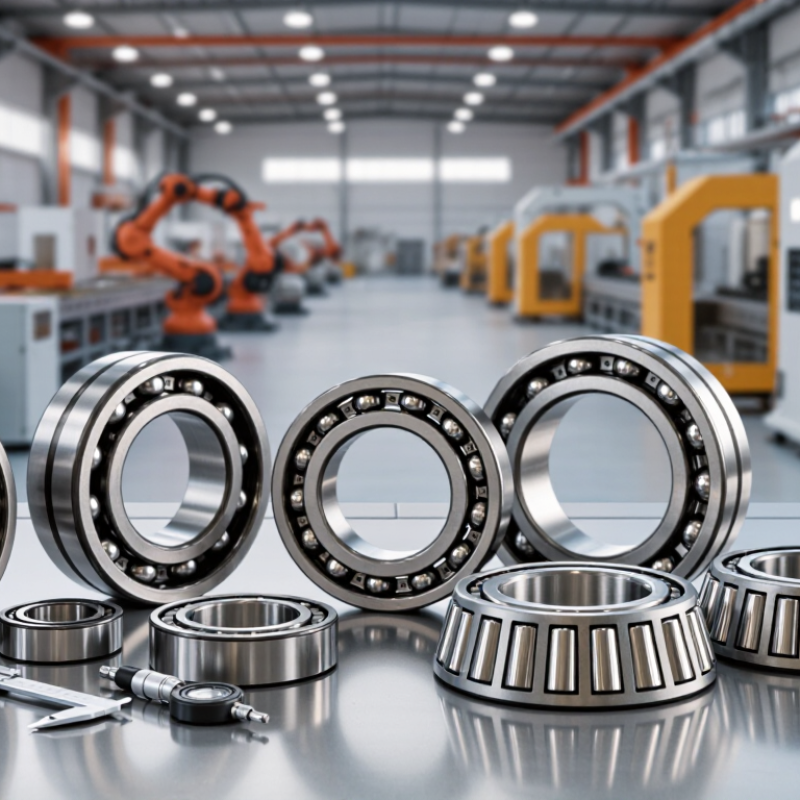
China produces several important types of power bearings for motors, gearboxes, pumps, conveyors, and agricultural machines. Deep-groove ball bearings are widely used for moderate radial and axial loads. Angular-contact bearings support combined loads in machine-tool spindles and high-speed equipment. Cylindrical roller bearings handle heavier radial forces, especially in electric motors and industrial gear systems.

Tapered roller bearings suit wheel hubs, reducers, and other applications with strong radial and axial loads. Spherical roller bearings tolerate shaft misalignment, which helps in vibrating screens and large conveyors. Thrust ball and thrust roller bearings manage mainly axial forces. Their cages may use steel, brass, or engineered polymers, depending on speed, temperature, and lubrication. Small details matter. Poor grease selection can shorten service life quickly.

From practical sourcing experience, I would check more than a supplier’s catalog. Ask for load ratings, steel specifications, heat-treatment records, dimensional reports, and batch traceability. Clean raceways, consistent rotation, and controlled internal clearance are useful inspection points. Chinese factories vary greatly in process control, so samples should run under realistic speed and load conditions. An attractive price is not proof of reliability. I have also seen technically suitable bearings fail because sealing or mounting was ignored. The better choice considers housing fit, shaft tolerance, operating temperature, and maintenance access. Sometimes, the overlooked installation detail causes the real problem.

How to Evaluate Chinese Power Bearing Quality

What Are the Best Power Bearings from China?

How to Evaluate Chinese Power Bearing Quality

China Bearing Industry Association’s 2023 statistics reported roughly 26 billion bearing sets produced in China. High volume does not automatically mean consistent quality. Evaluate the factory, process controls, and inspection records behind each power bearing. Ask for steel cleanliness data, hardness results, dimensional tolerances, and cage material specifications. ISO 281 rating-life calculations should match your load, speed, lubrication, and operating temperature.

Check vibration values, radial clearance, roundness, and seal friction. These details often explain early overheating or noise. Request batch traceability from raw steel to final inspection. A reliable supplier should provide sampling plans and calibration records, not only a polished certificate. ISO 15243 failure analysis can help identify fatigue, contamination, poor lubrication, or mounting damage. One weakness remains: laboratory results cannot fully predict careless installation in the field.

Tips: Compare samples from three production batches. Measure noise and temperature after a controlled running test. Use the same grease and load conditions. Keep photographs of raceway surfaces before and after testing. The U.S. Department of Energy reports that motor systems use about 69% of industrial electricity, so bearing friction deserves attention. Numbers matter. A lower purchase price may hide higher energy and maintenance costs. Even experienced buyers sometimes trust paperwork too quickly. That deserves a second look.

How to Evaluate Chinese Power Bearing Quality

Recommended evaluation weighting for industrial power-bearing sourcing

This framework prioritizes measurable quality factors commonly used in bearing procurement: dimensional accuracy and material or heat-treatment control are weighted heavily because they directly affect fit, fatigue resistance, noise, and service life. Verification should include inspection records, test reports, process traceability, and compliance with applicable ISO bearing standards.

Which Chinese Power Bearing Brands Are Worth Considering?

Chinese power-bearing suppliers deserve closer evaluation, but low prices should not lead the decision. The China Bearing Industry Association reported industry revenue above RMB 200 billion in recent years. That scale supports strong production depth. It does not guarantee equal quality.

The most valuable manufacturers usually specialize in motor, gearbox, pump, or turbine applications. Look for controlled heat treatment, automated grinding, and documented steel traceability. These details affect vibration, temperature, and service life. A 2024 Mordor Intelligence report identifies industrial machinery and automotive demand as major growth drivers in China’s bearing market. Suppliers serving demanding sectors may therefore offer better process discipline.

Ask for load ratings, noise data, dimensional inspection records, and fatigue-test results. ISO 9001 certification is useful, but it is only a starting point. I would also request batch samples before approving a large order. That step catches problems that brochures hide. In my experience, some factories communicate impressively but provide weak failure analysis. That is worth questioning. Check whether the supplier follows ISO 281 rating calculations and can explain lubricant selection under heat and speed. A 2023 Grand View Research analysis also links bearing-market growth with automation and renewable-energy equipment, where reliability matters more than appearance. The strongest Chinese candidates are not simply the cheapest. They are the ones that prove consistency, respond clearly, and accept technical scrutiny.

How to Choose the Right Power Bearing for Your Application

What Are the Best Power Bearings from China?

Choosing the right power bearing starts with the machine, not the supplier. A conveyor drive may need high radial capacity, while a motor shaft needs low friction and controlled noise. Check load, speed, temperature, shaft fit, and contamination before comparing prices. IEA’s Energy Efficiency 2023 report states that electric motors consume about 45% of global electricity. Small bearing losses can therefore matter across large motor fleets.

Use ISO 281 to estimate basic rating life, but do not treat the L10 value as a guarantee. It predicts the life at which 90% of identical bearings are expected to survive under defined conditions. Real equipment faces vibration, misalignment, moisture, and poor lubrication. I have seen specifications fail because grease compatibility was ignored. That detail is easy to miss.

For power applications sourced from China, request material certificates, dimensional inspection records, hardness results, and traceability for each production batch. Ask for measured noise, vibration, sealing performance, and rotational torque. The World Bearing Association’s Bearing Damage Atlas links common failures to lubrication, contamination, electrical current, and mounting errors. Select clearance and sealing around the actual operating temperature, not a catalogue average. A sealed bearing may protect against dust, yet create excess heat at high speed. Question the convenient option. A lower purchase price can become expensive when downtime, shaft damage, and repeated replacement enter the calculation.

What Are the Best Power Bearings from China? - How to Choose the Right Power Bearing for Your Application

Bearing Type Primary Load Capability Typical Speed Capability Typical Bore Range Sealing and Lubrication Options Best-Fit Applications Main Advantages Key Selection Considerations
Deep Groove Ball Bearing Moderate radial loads; light to moderate axial loads in both directions High Approximately 10–200 mm Open, shielded, or contact-sealed versions; grease or oil lubrication Electric motors, pumps, fans, gearboxes, conveyors, and general industrial equipment Low friction, quiet operation, compact design, and broad availability Choose based on radial load, axial load, required speed, internal clearance, sealing, and operating temperature.
Angular Contact Ball Bearing Combined radial and axial loads; axial capacity depends on contact angle and arrangement High to very high Approximately 10–150 mm Usually open or lightly sealed; grease or oil lubrication Machine-tool spindles, precision pumps, compressors, screw drives, and high-speed shafts High stiffness, accurate running, and strong axial-load performance Select the contact angle, preload, precision class, and single- or double-row arrangement according to axial load and stiffness requirements.
Tapered Roller Bearing High radial loads and high axial loads in one direction; paired bearings support loads in both directions Moderate Approximately 15–300 mm Generally open; oil or high-quality grease lubrication Gearboxes, wheel hubs, heavy-duty transmissions, industrial reducers, and material-handling equipment High load capacity, good rigidity, and controlled axial positioning Check equivalent dynamic load, adjustment or preload, mounting accuracy, lubrication, and allowable operating temperature.
Spherical Roller Bearing Very high radial loads and moderate axial loads in both directions Low to moderate Approximately 25–500 mm Open or sealed designs; grease or oil lubrication Mining equipment, crushers, conveyors, paper machinery, fans, and heavy industrial drives High load capacity and tolerance of shaft or housing misalignment Evaluate misalignment, vibration, shock loads, shaft deflection, clearance, lubrication method, and sealing requirements.
Cylindrical Roller Bearing Very high radial loads; selected designs can support limited axial loads Moderate to high Approximately 20–400 mm Mostly open; oil or grease lubrication depending on speed and heat generation Electric motors, generators, gearboxes, rolling equipment, and high-load machinery High radial capacity, high radial stiffness, and good resistance to shock loading Confirm flange configuration, axial displacement requirements, internal clearance, heat dissipation, and installation precision.
Thrust Ball Bearing Axial loads in one or both directions; limited radial-load capability Low to moderate Approximately 10–160 mm Open designs are common; grease or oil lubrication Vertical shafts, screw mechanisms, low-speed indexing systems, and light axial-load assemblies Simple construction, low friction, and efficient axial-load support Do not use as the primary support for substantial radial loads; verify axial load direction, speed, alignment, and lubrication.
Spherical Roller Thrust Bearing Very high axial loads plus moderate radial loads Low to moderate Approximately 30–300 mm Typically open; oil lubrication is common in heavily loaded or high-temperature systems Extruders, vertical drives, pumps, heavy gearboxes, and large rotating equipment High axial capacity and ability to accommodate angular misalignment Check axial load magnitude, rotational speed, minimum load, lubrication flow, alignment, and housing strength.
Needle Roller Bearing High radial loads relative to cross-section; limited axial-load capability unless combined with thrust components Moderate to high Approximately 5–200 mm Open, sealed, or drawn-cup designs; grease or oil lubrication Automotive transmissions, planetary gears, rocker mechanisms, pumps, and compact power drives Small radial section, high radial capacity, and efficient use of limited installation space Verify shaft hardness and surface finish, raceway geometry, radial clearance, lubrication access, and oscillating-motion requirements.

Note: Speed levels, bore ranges, and load descriptions are typical engineering guidelines rather than universal limits. Final selection should be based on the bearing manufacturer's catalogue data, dynamic and static load ratings, calculated service life, lubrication, temperature, contamination, mounting accuracy, and safety factors.