Why Are Pillar Bearings Important for Structural Stability?
Pillar bearings play a crucial role in maintaining structural stability. According to industry expert Dr. Emily Carter, "Pillar bearings are the unsung heroes of architecture." They support the weight of buildings and distribute loads efficiently. Without them, structures could face severe risks.
The integrity of a building relies on its foundation. Pillar bearings anchor the structure to the ground. They absorb various forces from above and below. These bearings prevent unequal weight distribution, which can lead to cracks and structural failure. Each bearing has a specific design that aligns with its purpose.
However, reliance on pillar bearings must be approached with caution. Neglecting regular maintenance could lead to failures. Issues can go unnoticed until it is too late. Innovations in materials and design are essential, yet they should not overshadow the importance of traditional methods. Reflection on past failures can guide future improvements in the industry.

The Role of Pillar Bearings in Structural Design
Pillar bearings play a crucial role in structural design. They absorb loads from the structure above. This helps distribute weight evenly. If designed poorly, they can lead to serious issues. For instance, uneven load distribution may cause cracks in walls or even structural failure.
The materials used in pillar bearings are significant. Steel, concrete, and composite materials each have their own properties. Choosing the wrong material can affect stability. Also, the installation process requires precision. A slight misalignment can lead to long-term problems. Additionally, environmental factors, like temperature variations, can impact performance.
Engineers must regularly assess the condition of pillar bearings. Over time, wear and tear can compromise their effectiveness. This oversight can lead to unexpected costs or safety hazards. Therefore, constant monitoring is essential. Structural design involves complexities that require ongoing reflection and adaptation. A small mistake can have big consequences, reminding us of the delicate balance involved in construction.
Why Are Pillar Bearings Important for Structural Stability?
| Bearing Type |
Load Capacity (kN) |
Functionality |
Common Applications |
Installation Considerations |
| Elastomeric Bearings |
500 - 2000 |
Provide flexibility and damping |
Bridges, High-Rise Buildings |
Proper alignment and support |
| Sliding Bearings |
300 - 1500 |
Allow for horizontal movement |
Storage Facilities, Industrial Structures |
Surface smoothness and lubrication |
| Fixed Bearings |
800 - 3000 |
Restrict movement, providing stability |
Dams, Heavy Machinery |
Robust foundation required |
| Spherical Bearings |
600 - 2500 |
Accommodate angular movement |
Bridges, Oil Platforms |
Precision in angles and load distribution |
Understanding the Mechanics of Pillar Bearings
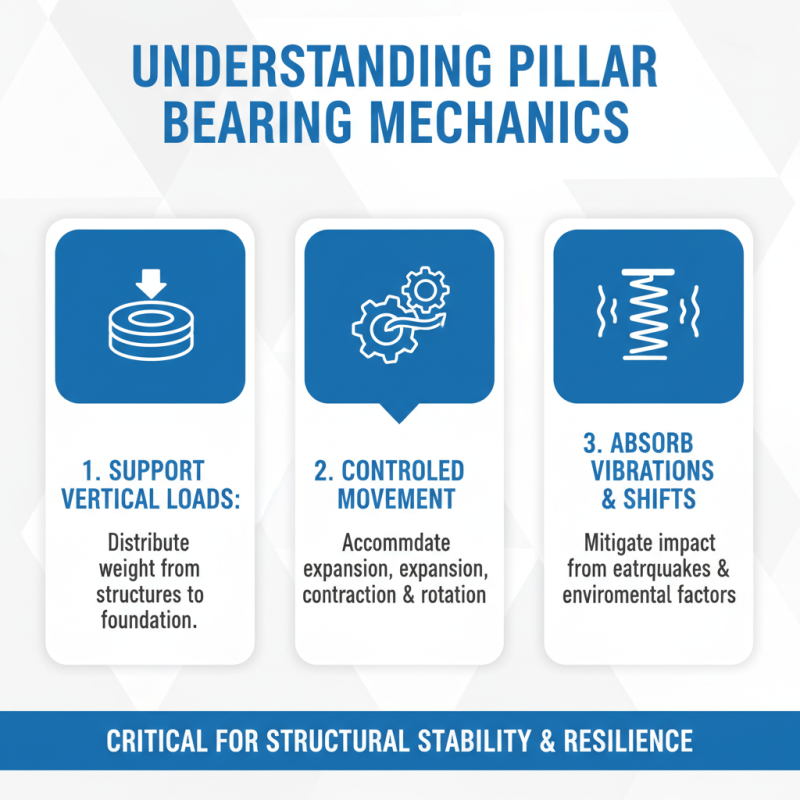
Pillar bearings play a critical role in maintaining structural stability. These components support vertical loads, ensuring that buildings and bridges withstand weight without collapsing. The mechanics behind pillar bearings are fascinating. They allow for controlled movement, absorbing vibrations and shifts caused by environmental factors. This adaptability is vital, especially in earthquake-prone areas.
Understanding the mechanics is essential for engineers. They must consider factors like material selection and load distribution. A poorly designed bearing can lead to significant instability. Even minor flaws can have severe consequences. For instance, inadequate weight capacity may cause beams to sag. Regular inspections are crucial; failure to notice wear can be catastrophic.
While pillar bearings are often overlooked, their importance cannot be overstated. They may seem simple, yet they operate under immense pressure. Knowing how they function helps ensure safety. Engineers should reflect on previous failures in design and construction. Learning from these incidents can improve future projects. A proactive approach can prevent disasters tied to structural failure.
How Pillar Bearings Contribute to Load Distribution
Pillar bearings play a crucial role in ensuring structural stability. They serve as a bridge between structural elements and the ground. By distributing loads effectively, these bearings prevent uneven stress concentrations. This is vital in avoiding structural failure.
When it comes to load distribution, pillar bearings allow buildings to maintain balance. Each bearing should carry a specific load. If one bearing fails to perform, it can lead to significant issues. For example, under heavy loads, a weak bearing may compress more than others. This imbalance can cause structural deformation over time.
Furthermore, regular inspections are necessary. Problems may not be visible at first. An unnoticed misalignment can lead to severe damage. It's essential to monitor load variations. This attention to detail ensures that structures remain safe and functional. Without proper maintenance, issues may escalate rapidly. Pillar bearings are simple yet complex components, deserving of our focus.
Importance of Pillar Bearings in Structural Stability
This bar chart illustrates the various contributions of pillar bearings to structural stability, including their roles in load distribution, vibration absorption, stress reduction, and impact on lifespan. Understanding these factors is crucial for ensuring the reliability and safety of structures.
Common Types of Pillar Bearings and Their Applications
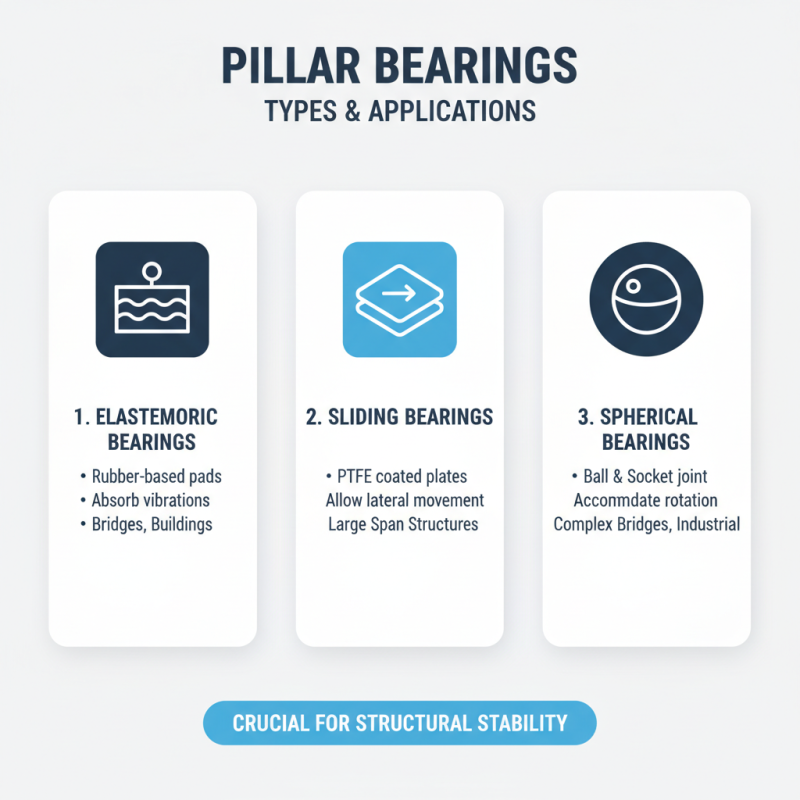
Pillar bearings are crucial for ensuring structural stability. They help distribute loads from the superstructure to the foundation. Various types of pillar bearings cater to different needs. Common types include elastomeric bearings, sliding bearings, and spherical bearings. Each type has unique properties suited for specific applications.
Elastomeric bearings, for example, offer flexibility. They can absorb vibrations and reduce stress on structures. These bearings are often used in bridges and high-rise buildings. According to a report by the American Society of Civil Engineers, nearly 30% of structural failures are linked to inadequate bearing systems. This statistic highlights the importance of choosing the right type for the job.
Sliding bearings are commonly used in seismic zones. They allow movement in one direction, which helps withstand forces during an earthquake. Spherical bearings provide multi-directional movement. They are used in complex structures like dams and large bridges. However, the challenge remains in maintenance and monitoring. Deterioration over time can compromise structural integrity. Regular inspections are necessary to ensure safety and performance. These factors should be considered when selecting pillar bearings for any construction project.
Factors Influencing the Performance of Pillar Bearings
Pillar bearings play a crucial role in maintaining the stability of structures. Several factors influence their performance. The load capacity is fundamental. It determines how much force the bearing can support without failing. According to a recent industry report, the ideal load distribution can enhance stability by up to 30%.
Environmental conditions also impact pillar bearing efficiency. Temperature fluctuations can cause material expansion or contraction. A study found that bearings made from advanced composites showed a 20% reduced response to temperature changes. This resilience contributes to higher longevity and lower maintenance costs.
Installation quality cannot be overlooked. Proper alignment ensures that the loads are evenly distributed. Poor installation may lead to early deterioration. Research indicates that nearly 15% of structural failures stem from inadequate installation practices. Therefore, focusing on these critical aspects can significantly enhance the performance and reliability of pillar bearings.