China Top Abs Bearing Manufacturers and Their Impact on the Industry?
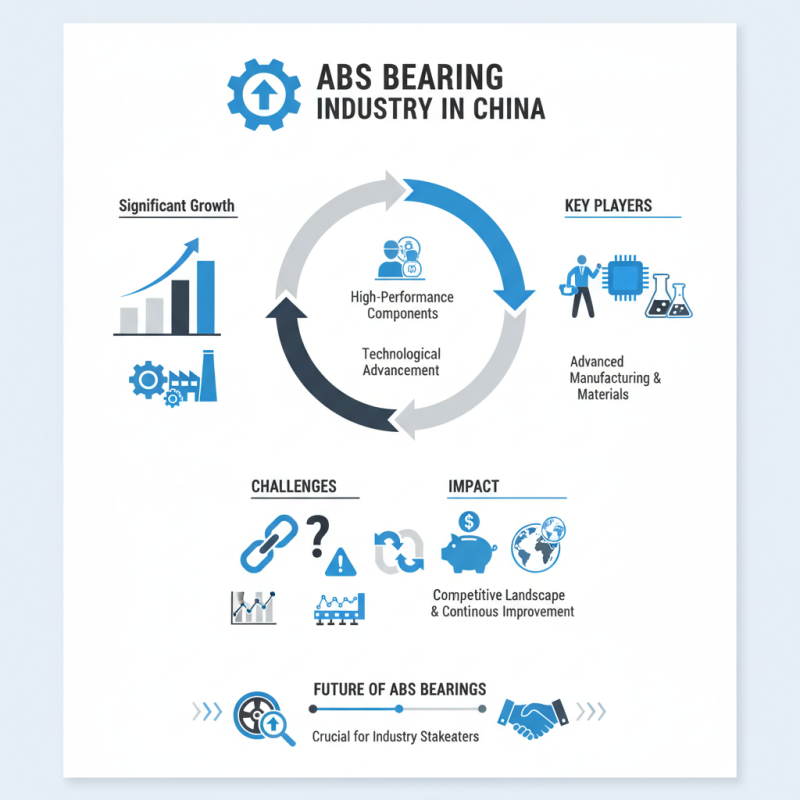
The ABS bearing industry in China has experienced significant growth over recent years. This surge is driven by increasing demand for high-performance components in various sectors. Manufacturers are at the forefront, pushing the boundaries of technology. Their innovative designs enhance product reliability and efficiency.
Chinese ABS bearing manufacturers have established themselves as key players. They leverage advanced manufacturing techniques and materials. However, challenges remain. Quality control and consistency in production can sometimes fall short. As a result, this raises questions about long-term reliability.
Despite these challenges, the impact of these manufacturers cannot be overlooked. They contribute to cost-effective solutions, benefiting industries worldwide. The competitive landscape fosters continuous improvement. This dynamic environment shapes the future of ABS bearings. Understanding these manufacturers' roles is crucial for industry stakeholders.
Overview of Abs Bearing Manufacturing in China
The ABS bearing manufacturing sector in China is essential for global supply chains. This industry combines advanced technology and skilled labor. In recent years, the demand for ABS bearings has surged, fueling innovation and production capacity. Many manufacturers are investing in automation to enhance efficiency. This progress has led to improvements in product quality and cost-effectiveness.
Tips: When selecting ABS bearings, always consider the manufacturing process. Look for companies using precise techniques. This ensures durability and performance.
China's ABS bearing manufacturers face challenges, including competition and environmental regulations. Balancing growth with sustainability is crucial. Some companies struggle to implement eco-friendly practices while maintaining profit margins. Transparency in operations may also be an area needing improvement.
Tips: Research manufacturers' environmental practices. Sustainable choices can benefit your projects long-term.
The impact of these manufacturers on the industry is significant. They not only meet domestic needs but also serve international markets. Global partnerships are becoming more common, leading to knowledge exchange. However, ensuring consistent quality remains a challenge.
China Top Abs Bearing Manufacturers and Their Impact on the Industry
| Manufacturer Type |
Annual Production (Units) |
Market Share (%) |
Export Volume (Units) |
R&D Investment (Millions) |
| Large-scale Manufacturer |
5,000,000 |
25% |
1,200,000 |
50 |
| Medium-sized Manufacturer |
2,500,000 |
15% |
600,000 |
20 |
| Small-scale Manufacturer |
1,000,000 |
10% |
150,000 |
5 |
| Innovative Start-up |
300,000 |
5% |
30,000 |
2 |
| International Joint Venture |
1,700,000 |
18% |
400,000 |
30 |
Leading Manufacturers of Abs Bearings in China
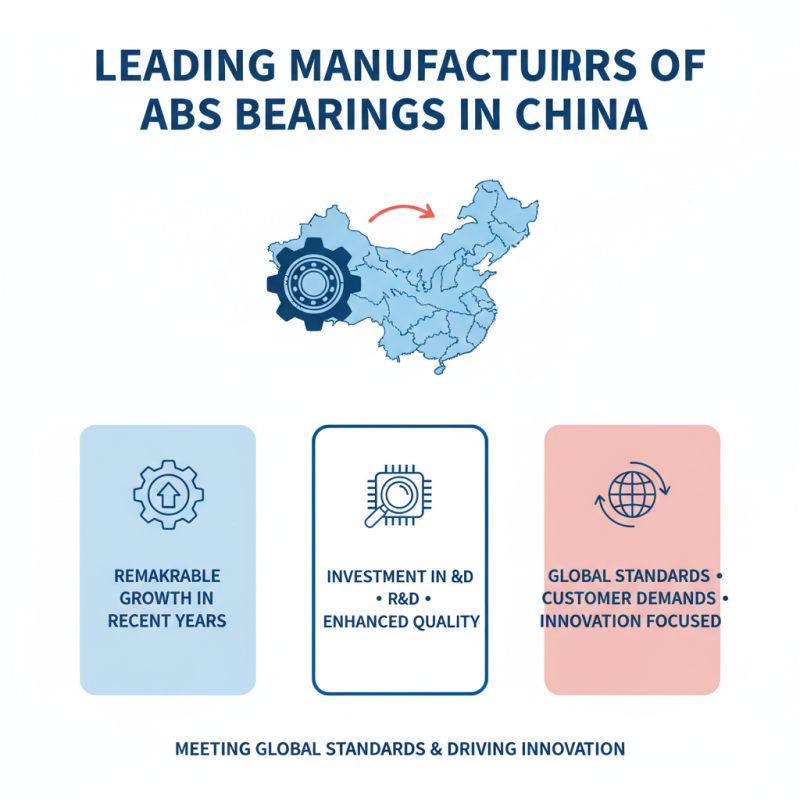
China's ABS bearing manufacturing industry has shown remarkable growth in recent years. Several leading manufacturers have emerged, playing a crucial role in this development. These companies have invested heavily in research and development to enhance product quality and performance. They focus on innovation, ensuring that their ABS bearings meet global standards and customer demands.
Production capabilities vary among these manufacturers. Some specialize in high-volume production, while others focus on niche markets. This diversity allows customers to select products tailored to their specific needs. However, not all manufacturers maintain the same quality control standards. This inconsistency can lead to varying product reliability. Buyers often need to thoroughly evaluate potential suppliers, especially when entering long-term contracts.
Moreover, these manufacturers face challenges related to competition and raw material sourcing. The rapid expansion of the industry has attracted many players, leading to price wars. This can impact profit margins and push some companies to cut corners, compromising quality. The need for continuous improvement is essential. Manufacturers must invest not only in technology but also in workforce training. By doing so, they can ensure their bearings remain competitive in a demanding market.
Technological Innovations by Chinese Abs Bearing Producers
Chinese ABS bearing manufacturers are significantly shaping the industry with their technological innovations. Recent reports indicate that the market for polymer bearings is projected to grow at a compound annual growth rate (CAGR) of 7.4% from 2023 to 2030. This growth is driven by advancements in materials science and manufacturing processes.
One notable trend is the development of ultra-lightweight bearings made from advanced composites. These materials not only reduce weight but also enhance durability. Some manufacturers are investing heavily in 3D printing technology. It allows for custom designs that cater to specific industry needs. However, challenges remain. The scalability of these innovations is a concern. Not all manufacturers have the resources to adopt such technologies.
Moreover, energy efficiency has become a focal point for producers. Many companies are implementing smarter designs that minimize friction. According to a recent industry analysis, bearings with improved energy efficiency can reduce operational costs by up to 20%. Yet, some manufacturers still grapple with the transition to greener practices. The sustainability aspect is evolving but is not universally adopted across the board.
Impact of Chinese ABS Bearing Manufacturers on the Industry
This chart illustrates the technological innovations and production capacities of major ABS bearing manufacturers in China, highlighting their impact on the global market.
Market Influence of Chinese Abs Bearing Manufacturers Globally
Chinese ABS bearing manufacturers have significantly impacted the global market. Their innovations and production capabilities have set new industry standards. Due to competitive pricing, many manufacturers have gained substantial market share. This has forced international companies to adapt or risk obsolescence.
The technological advancements in manufacturing processes are notable. Automation and precision engineering have enhanced quality and efficiency. However, challenges exist. Some companies struggle to maintain consistent quality as production scales up. There is also a risk of over-reliance on one market for supplies.
Furthermore, the global supply chain is evolving. Chinese manufacturers are expanding their reach into emerging markets. This shift presents opportunities but also uncertainties. Environmental regulations pose challenges as companies seek to comply with new standards. Overall, the presence of Chinese ABS bearing manufacturers reshapes industry dynamics, compelling all players to rethink their strategies.
Challenges and Opportunities in the Chinese Abs Bearing Industry
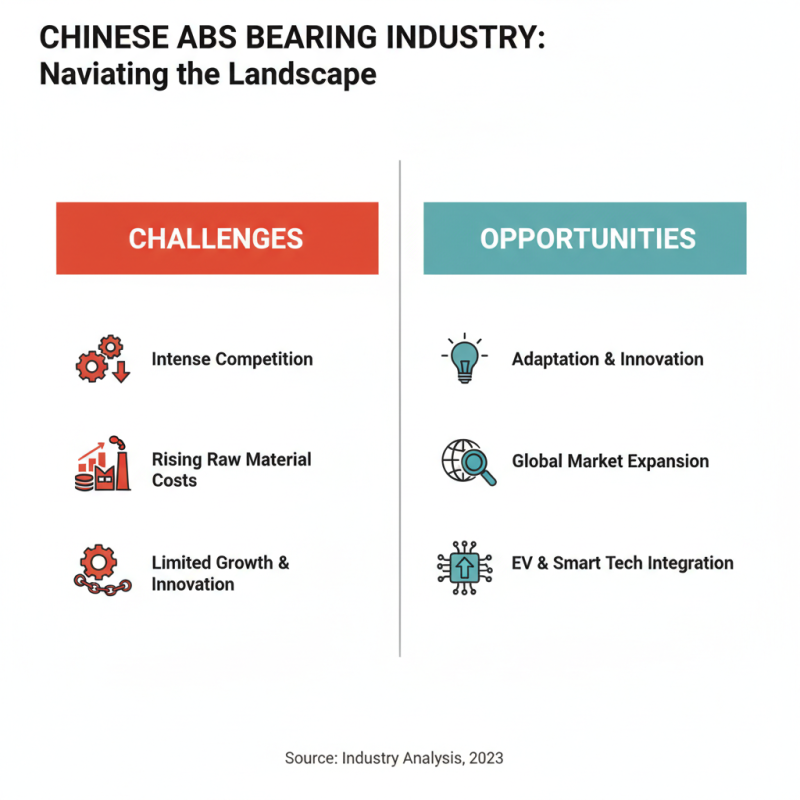
The Chinese ABS bearing industry is navigating a complex landscape. Manufacturers face challenges that range from intense competition to rising raw material costs. These pressures can limit growth and innovation. Many companies must adapt quickly to remain relevant and profitable.
Opportunities are also present, despite these challenges. As technology advances, there is potential for increased efficiency in production. Businesses can invest in automation and smart technologies to improve precision and reduce waste. Moreover, the global demand for high-quality bearings presents a chance for Chinese manufacturers to expand their market reach.
Yet, this industry must not overlook sustainability. The drive for eco-friendly production processes is becoming essential. Manufacturers must assess their environmental impact seriously. Balancing profitability and responsibility will be a crucial factor for future success. The industry must embrace change, constantly reflecting on its practices for continuous improvement.