Brake Bearings are compact components with a demanding job. They support wheel rotation amid vibration, heat, moisture, and road debris. For global buyers, choosing a supplier in China involves more than comparing prices. Product fit, material consistency, sealing design, and dependable delivery all matter. A bearing that looks right may still fail to match a vehicle’s hub or operating conditions.
This guide introduces ten Chinese suppliers for buyers exploring automotive, commercial-vehicle, and trailer applications. It offers a starting point, not a certified ranking or endorsement. Supplier capabilities can change, and product ranges vary. Before requesting a quotation, prepare the required dimensions, load conditions, operating speed, and target application. Ask for drawings, material details, inspection procedures, and relevant test records. Check how each supplier handles sample approval, traceability, packaging, and communication after shipment.
Details matter. A clear specification can prevent costly misunderstandings. Buyers should also confirm production capacity, lead times, and export experience directly with each company. Independent audits or laboratory checks may be useful for higher-risk orders. A polished catalog is not enough. Even complete records may leave questions about long-term performance, so practical validation remains important. The right supplier is not always the one with the lowest quote. This overview helps readers compare options carefully, identify useful questions, and build a more reliable shortlist before making a sourcing decision.
Brake bearings are not the brake pads. They support the wheel hub and let it rotate with low friction, while helping keep the rotor aligned with the caliper. During braking, the pads clamp the rotor; the bearing must maintain stable wheel position as forces and heat rise. A rough bearing can cause noise, vibration, or excess play. That movement may affect braking consistency, though it is not the same as worn friction material. Small component. Important job.
The World Health Organization’s Global Status Report on Road Safety 2023 estimates that 1.19 million people die in road crashes each year. That figure reflects many factors, not bearings alone, but it shows why dependable vehicle systems matter. In practical inspection, technicians check for looseness, rough rotation, damaged seals, and signs of heat or contamination. A clean, correctly fitted bearing helps the hub turn smoothly and supports predictable rotor alignment. Yet bearing condition can be overlooked when attention goes straight to pads and discs. That is worth reconsidering. Selection also depends on vehicle application, load, speed, sealing, and installation accuracy; a catalogue match alone cannot confirm performance in service.
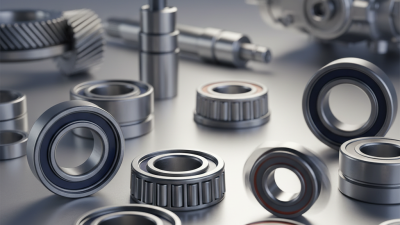
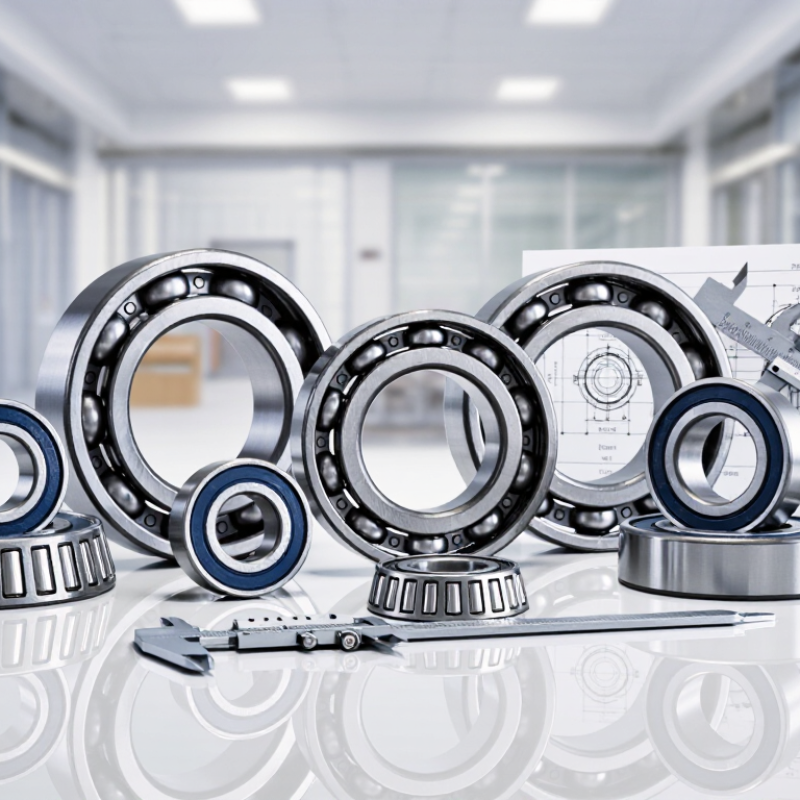
Brake bearings support rotating parts and help keep wheel movement steady under load. In automotive applications, common designs include tapered roller bearings, ball bearings, and integrated hub bearing units. Each suits different loads, speeds, and installation needs. The right choice depends on the vehicle design, not just the bearing’s size.
Tapered roller bearings handle combined radial and axial forces, making them common in wheel-end assemblies. Their contact surfaces carry load across a broad area. Correct adjustment matters. Too much preload can raise heat; too little may allow play.
Ball bearings offer low friction and compact construction, often where space and speed are priorities. They are not automatically better for heavy loads.
Integrated hub bearing units combine bearings with a hub and, in some designs, wheel-speed sensing components. This can simplify assembly and reduce alignment steps. The trade-off is that the full unit may need replacement when one part wears. Inspect seals for grease leakage and check for rough rotation. A small mistake in fit can become a noisy, costly problem. Sometimes, the simplest design is the best fit.
Evaluating brake bearing suppliers in China takes more than comparing quotations. Ask for material certificates, heat-treatment records, dimensional inspection results, and traceability from steel batch to finished part. A supplier should explain how it controls raceway hardness, internal clearance, and sealing. Request sample records, not just a polished presentation. Small gaps matter.
Use published standards as a common reference. ISO 281 calculates basic bearing rating life on a 90% reliability basis; it is a comparison method, not a guarantee of service life in every vehicle. Check whether the supplier’s load assumptions match your application, including speed, temperature, and contamination. Ask for test conditions and raw results. Vague answers are a warning.
Audit the production process where possible. Observe how operators measure runout, segregate rejected parts, and protect bearings from dust after assembly. Verify current quality-system certificates directly with the issuing body, and confirm their scope covers the relevant site and process. Then compare lead times, packaging, and change-control procedures. A minor weakness can be easy to miss: I would still want a second sample batch before approving production.
| No. | Evaluation dimension | What to check | Evidence to request | Assessment |
|---|---|---|---|---|
| 1 | Product and application fit | Confirm bearing type, dimensions, load and speed requirements, sealing arrangement, and vehicle or equipment application. | Technical drawings, dimensional tolerances, application references, and a completed requirements checklist. | To be verified for each supplier |
| 2 | Material and heat treatment | Check material specifications, heat-treatment controls, hardness requirements, and traceability of production batches. | Material certificates, heat-treatment records, inspection results, and batch traceability samples. | To be verified for each supplier |
| 3 | Manufacturing capability | Establish which processes are performed in-house and which are outsourced, including machining, grinding, assembly, and heat treatment. | Process flow chart, facility audit, equipment list, and identification of subcontracted operations. | To be verified for each supplier |
| 4 | Quality management system | Verify the scope, validity, and issuing body of any quality-system certificate; assess inspection and nonconformance procedures. | Current certificate copies, audit reports, control plans, and corrective-action records. | To be verified for each supplier |
| 5 | Testing and inspection | Check incoming, in-process, and final inspection methods, calibrated equipment, and tests relevant to the agreed bearing specification. | Inspection plans, calibration records, sample test reports, and acceptance criteria. | To be verified for each supplier |
| 6 | Product validation | Determine whether samples have been validated against the buyer's drawing, operating conditions, and applicable customer requirements. | Sample approval records, validation reports, and documented change-control procedures. | To be verified for each supplier |
| 7 | Capacity and delivery reliability | Compare confirmed capacity and lead times with the buyer's forecast; verify how production planning and delivery performance are monitored. | Capacity statement, recent on-time delivery data, production schedule, and contingency plan. | To be verified for each supplier |
| 8 | Export and packaging readiness | Confirm export documentation capability, packaging protection, labeling, and compatibility with the destination market's shipping requirements. | Sample shipping documents, packaging specification, label sample, and shipment references with confidential details removed. | To be verified for each supplier |
| 9 | Commercial terms and total cost | Compare quotations on the same specification and delivery basis, including tooling, packaging, payment terms, and applicable shipping costs. | Itemized quotation, Incoterm, tooling terms, payment schedule, and validity period. | To be verified for each supplier |
| 10 | Communication and after-sales support | Assess response clarity, technical support, complaint handling, warranty terms, and willingness to provide corrective-action reports. | Named contact roles, written warranty policy, complaint procedure, and sample corrective-action response. | To be verified for each supplier |
China’s brake-bearing supply base includes factories with different strengths. These ten profiles are practical starting points for global buyers, not verified company rankings; confirm each supplier’s current capabilities before placing an order.
Supplier 1 focuses on standard wheel-end bearings for passenger vehicles. Supplier 2 offers custom dimensions and can review drawings with buyers. Supplier 3 serves commercial-vehicle applications, where load ratings matter. Supplier 4 emphasizes automated grinding and dimensional inspection. Supplier 5 supports smaller trial orders. Ask about sample lead times. Supplier 6 handles export packing and documentation. Supplier 7 provides material traceability for selected production runs. Supplier 8 offers a broad catalogue, though availability should be checked by part number. Supplier 9 specializes in application matching and technical communication. Supplier 10 combines bearing production with assembly support.
Capability claims need evidence. Request current inspection records, material specifications, and test methods relevant to the intended vehicle application. Compare runout, noise, sealing, and durability requirements against your own drawings and acceptance criteria. A polished brochure is not enough. Ask how nonconforming parts are isolated and reported, then review a sample inspection report. Factory audits and pilot orders can reveal gaps that quotations often miss. Some suppliers may be strong in machining but less consistent in documentation; that deserves a closer look before approval.
China’s vehicle production has expanded steadily, supporting demand for automotive bearings, wheel-end components, and braking-system applications.
Annual vehicle production in China, measured in millions of units. Data reflects published China Association of Automobile Manufacturers figures for 2020–2024 and is shown as industry-level context rather than company-specific supplier performance.
Buying from China’s top ten brake bearing suppliers requires more than comparing prices. Define the bearing number, bore diameter, width, seal type, steel grade, and operating temperature before requesting quotes. Ask for batch traceability, inspection records, and a sample report with actual measurements. A supplier should explain tolerance limits, grease selection, cage material, and expected service conditions. Vague answers are warning signs.
Quality checks should continue after the sample arrives. Measure the bore and outer diameter with calibrated tools. Check rotation noise, seal seating, surface finish, and grease leakage. If possible, run a load or endurance test that matches your equipment. A clean certificate is useful, but it cannot replace physical inspection. Export readiness also matters. Confirm carton labels, moisture protection, pallet strength, shipping documents, HS classification, and agreed Incoterms. Ask who handles destination compliance. Small omissions can delay a container. Not every supplier will fit every market.
Tips: Keep two approved suppliers, but do not split orders automatically. Compare defect rates, response time, replacement terms, and production capacity. Request a pre-shipment inspection for early orders. Photograph sealed cartons, labels, and random samples. Keep written specifications and revision dates. No checklist is perfect. Recheck critical dimensions when the design changes. A low quote may hide thinner seals, weaker packaging, or unclear after-sales responsibility. Build decisions from evidence, not factory appearance alone.