2026 Best NUP Bearing Types for Global Buyers?
Choosing the 2026 best NUP Bearing requires more than comparing catalog prices. Global buyers must examine radial load, axial guidance, speed, lubrication, contamination, and shaft alignment. A small mismatch can create heat, vibration, and premature downtime. The ISO 281:2007 rolling-bearing life model remains a key reference, but calculated L10 life is not a promise for every installation.
Industry data shows why this decision matters. Grand View Research values the global bearing market at more than USD 100 billion in recent estimates, with industrial machinery, automotive, and energy remaining major demand sectors. SKF’s Rolling Bearings Catalogue also stresses the combined effect of load, speed, lubrication, and mounting accuracy. These factors separate a reliable NUP Bearing from a merely compatible one. Robert Errichello, a recognized bearing-failure investigator, stated, “Lubrication is the life blood of a bearing.” That sentence is simple. It is also often ignored.
This guide compares NUP cylindrical roller bearing options for international purchasing teams. It considers standard sizes, material quality, internal clearance, sealing limits, cage design, traceability, and supplier documentation. Application details matter. A conveyor may face dust and shock, while a turbine may demand stable clearance and high-speed control. No universal winner exists. A bearing selected from a neat table can still fail in a poorly aligned housing. Buyers should verify OEM drawings, ISO compliance, test records, and actual operating conditions before placing volume orders. Mistakes happen, even in experienced teams. The goal is not perfect prediction, but better evidence and fewer expensive surprises.
What Is an NUP Cylindrical Roller Bearing?
A NUP cylindrical roller bearing is designed for high radial loads and accurate shaft guidance. Its rollers make line contact with the raceways, giving greater load capacity than typical ball bearings. The outer ring has two integral flanges. The inner ring has one fixed flange and one loose flange ring. This structure can locate the shaft axially in both directions while carrying radial force.
NUP bearings are often selected for gearboxes, electric motors, pumps, and industrial transmission systems. Their separable rings can simplify mounting, especially when the shaft and housing require separate installation. In real applications, correct internal clearance matters greatly. Excessive clearance may increase vibration. Insufficient clearance can raise operating temperature and shorten service life. Housing alignment, shaft hardness, lubrication type, and contamination control also deserve careful review. No selection is perfect without operating data.
Tips: Confirm the required bore, outside diameter, width, load, speed, and temperature before purchasing. Check whether axial movement is truly needed, because an NUP bearing normally acts as a locating bearing. Ask for dimensional tolerances and clearance values from a reliable technical source. A common mistake is choosing only by size. Actual load cycles and installation conditions often tell a different story. Where conditions are uncertain, testing one bearing under controlled operating conditions can reveal problems early.
How NUP Bearing Designs and Types Differ
2026 Best NUP Bearing Types for Global Buyers
How NUP Bearing Designs and Types Differ
NUP bearings use cylindrical rollers to carry high radial loads in compact machinery. Their defining design includes two outer-ring flanges, one fixed inner-ring flange, and one loose collar. This arrangement supports axial loads in both directions while allowing practical mounting and removal. Unlike NU bearings, NUP bearings can help locate a shaft axially. NJ bearings usually locate the shaft in one direction. N and NU designs mainly permit axial displacement between rings.
The best NUP type depends on the machine, not a generic ranking. Open designs suit clean, lubricated housings and higher operating temperatures. Sealed versions can reduce contamination risks, but seals may increase friction. Internal clearance also matters. C3 clearance may support thermal expansion, yet excessive clearance can create vibration and uneven load distribution. Cage material, precision class, load rating, speed, and lubrication should match the operating conditions. I often recheck shaft shoulders and housing fits because small dimensional errors cause large running problems. The first selection is not always the final selection.
Tips: Confirm boundary dimensions against current standards and technical drawings. Check axial load direction, temperature, contamination, and relubrication access. A test installation can reveal noise or heat issues before full production.
2026 Best NUP Bearing Types for Global Buyers?
How NUP bearing designs and common cylindrical roller bearing types differ
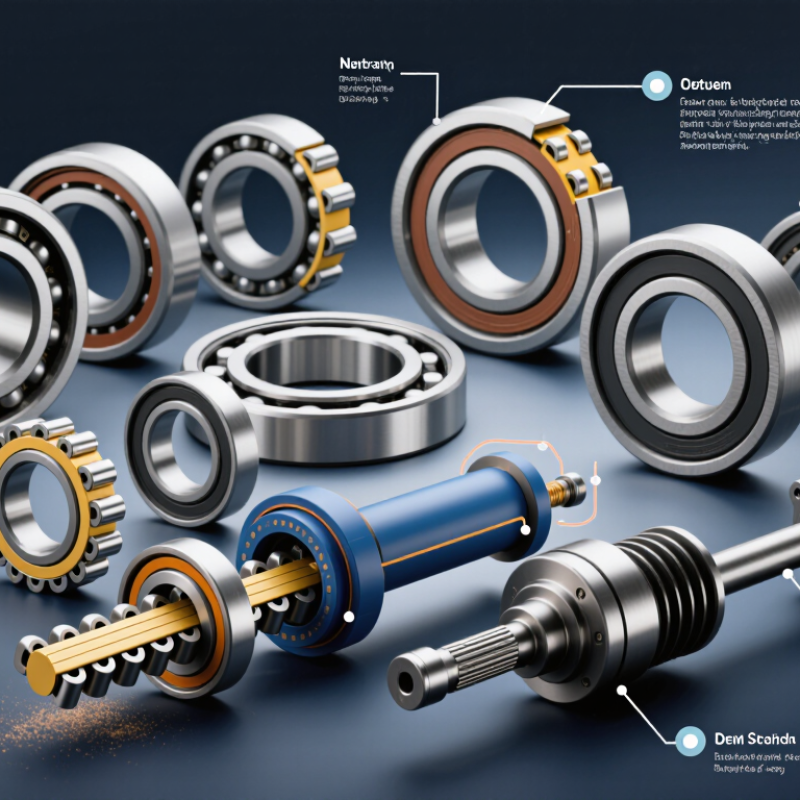
The chart compares common cylindrical roller bearing designs by flange configuration. NUP bearings use two integral outer-ring flanges, one integral inner-ring flange, and one loose inner-ring flange, allowing axial location in both directions while retaining the separable design advantages of cylindrical roller bearings. N, NU, NJ, and NF designs provide different levels of axial guidance and should be selected according to shaft-location, thermal-expansion, and housing requirements.
Key Performance Factors for Global Applications
NUP cylindrical roller bearings suit applications requiring radial load capacity and axial location in both directions. Their rib arrangement supports controlled shaft positioning under heavy loads. Global buyers should compare bearing types by load direction, speed, temperature, and available installation space. A larger bearing is not automatically safer. Excess clearance can increase vibration, while insufficient clearance may create heat during operation.
Performance depends heavily on lubrication and operating conditions. High-speed machinery needs suitable grease or oil, stable viscosity, and reliable replenishment intervals. In humid or dusty environments, sealing and housing protection become critical. Buyers should also check cage material, internal clearance, precision class, and allowable misalignment. Catalog speed ratings are useful references, not promises. Real performance changes with mounting accuracy, shaft finish, and cooling. I have seen technically correct selections struggle because the housing was slightly distorted.
Tips: Request load calculations, temperature limits, clearance data, and tested tolerance records. Confirm whether the bearing acts as a locating or floating position in the complete shaft system. Inspect the shaft and housing before installation. Clean tools matter. For global sourcing, require traceable inspection reports and consistent dimensional standards. A sample test under actual speed and load is more reliable than a paper comparison. Do not ignore replacement availability, packaging quality, or local technical support; these details often decide whether a bearing performs well after shipment and installation.
How to Select the Best NUP Bearing Type
How to Select the Best NUP Bearing Type
Selecting an NUP bearing starts with the shaft’s actual operating conditions, not only a catalog load rating. This bearing handles heavy radial loads and permits axial positioning in both directions. Its inner ring has two flanges, while the outer ring has one flange and a loose flange ring. Check the design carefully.
Measure the shaft diameter, housing bore, available width, and shoulder dimensions before ordering. A small mismatch can create excessive preload or unwanted movement. Calculate radial load, operating speed, temperature, and expected service hours. Choose internal clearance according to heat, fit, and shaft expansion. Standard clearance may work in a cool machine, but it can fail in a hot gearbox.
Lubrication also matters. Use grease when speeds are moderate and maintenance access is limited. Oil may suit faster shafts or housings that need heat removal. Confirm the lubricant’s temperature range and compatibility with seals. Keep misalignment low; an NUP bearing is not a solution for a bent shaft or poor housing alignment. During installation, apply force only through the fitted ring. Never strike the loose flange ring.
Field inspection often reveals overlooked details, such as fretting marks, uneven raceway wear, or a blue heat tint. These signs may indicate poor fits, contamination, or insufficient lubrication. I have seen catalog-based selections perform poorly because real duty cycles were underestimated. Recheck the machine after startup. Listen for vibration, measure temperature, and record changes. Perfect selection is difficult when operating data remains incomplete.
What Global Buyers Should Check Before Purchase
2026 Best NUP Bearing Types for Global Buyers?
NUP cylindrical roller bearings suit applications needing high radial capacity and limited axial positioning. Their loose flange ring allows controlled axial movement while supporting axial loads in both directions. Before purchase, confirm the shaft diameter, housing bore, load rating, operating speed, and required internal clearance. A small mismatch can create heat, noise, and early fatigue. Check whether the bearing will run under steady loads, shock loads, or frequent speed changes.
Tips: Request dimensional drawings, tolerance data, material details, and heat-treatment records. Compare the stated ratings with ISO 281 calculations, not only catalogue figures. Confirm clearance codes, cage design, lubrication compatibility, and maximum temperature. Ask for batch traceability and inspection reports. Packaging also matters; a damaged seal or damp carton can affect a clean bearing before installation.
Global buyers should inspect the marking, surface finish, flange ring fit, and rolling element condition. The raceways should appear smooth, without stains, dents, or polishing marks. Verify that product documents match the actual bearing code and shipment quantity. I have seen specifications look correct while the clearance was overlooked. That mistake is easy to repeat. If the application uses contaminated oil, vibration, or reversing axial loads, request a technical review before approval. Do not rely on price alone. A lower purchase cost may hide unsuitable tolerances, weak traceability, or poor storage history.